1

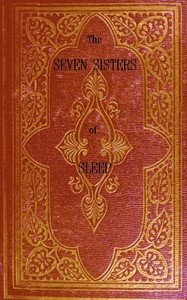
The Seven Sisters of Sleep Popular History of the Seven Prevailing Narcotics of the World — Key Ideas to Explore
(0 User reviews)
519
Project Gutenberg
2019
Not confirmed
Narcotics; Tobacco use; Psychotropic drugs; Psychotropic plants; Drug abuse
Readers of public-domain and historical texts
Project Gutenberg digital edition
en
Edition facts
Words
112,714
Reading time
491 min
Text sections
33
The catalog record for The Seven Sisters of Sleep Popular History of the Seven Prevailing Narcotics of the World — Key Ideas to Explore provides practical reading context through 112,714 words, 8 hr 11 min estimated reading time, and 33 detected text sections.
The text analysis averages about 26.2 words per sentence, while the detected sections provide another way to judge how the source is divided.
Project Gutenberg metadata also associates the work with “Narcotics,” connecting these edition facts with the source record’s subject description.
Source:
Project Gutenberg record #60805
M. C. Cooke's 1860 study examines seven major narcotics—opium, tobacco, hashish, betel, coca, henbane, and amanita—through a botanical, historical, and cultural lens, contrasting their effects and societal perceptions with vivid anecdotes and comparative analysis.
Editorial Edition Score
4.9/5
★★★★★
★★★★★
Calculated from edition completeness, EPUB availability, text structure and catalogue metadata. Not a user rating.
How this score is calculated
- Description quality20 pts
- Title & short description10 pts
- Source metadata20 pts
- Text length15 pts
- Chapters / structure15 pts
- EPUB file integrity20 pts
Total of 100 points, scaled to a 2.5-5.0 range. Editions with an empty description or a missing EPUB file are not scored.
Edition quality
Read the Text
h and glow of the blessed body restored it to life. No sooner did the ungrateful reptile find its health restored, than it poked forth its head, and said—
“‘Oh, Prophet, I am going to bite you.’
“‘Give me a sound reason, O snake, and I will be content.’
“‘Your people kill my people constantly, there is war between your race and mine.’
“‘Your people bite my people, the balance between our kindred is even, between you and me; nay, it is in my favour, for I have done you good.’
“‘And that you may not do me harm, I will bite you.’
“‘Do not be so ungrateful.’
“‘I will! I have sworn by the Most High that I will.’
“At the Name the Prophet no longer opposed the viper, but bade him bite on, in the name of God. The snake pierced his fangs in the blessed wrist, which the Prophet not liking, shook him off, but did him no further harm, nor would he suffer those near him to destroy it, but putting his lips to the wound, and sucking out the poison, spat it upon the earth. From these drops sprang that wond’rous weed, which has the bitterness of the serpent’s tooth, quelled by the sweet saliva of the Prophet.”[5]
Happy Moslem! you have solved the mystery, and your heart feels no doubt; but Christian dogs despairingly sigh for some revelation from the past, whether through history or tradition, of the first use of this plant. In vain we enquire who it was that first conceived and put in practice the idea of burning the large leaves of a weed, and drawing in the smoke to spit it out again? Who it was that discovered pleasure or amusement in tickling the nose with that “titillating dust” to enjoy the luxury of a sneeze, or find employment in blowing it out again? Ye shades of heroes departed, that hover around the pine-woods of the Saskatchewan, sail over the rolling prairies of Illinois, or roam along the strands of Virginia, tell us to what illustrious progenitor of Cree or Mohawk we are to accord the honour of a discovery more popular than any since the days when “Adam delved and Eve span?”
In default of the shades giving us the required information, we must resort to the faint footsteps which “the habit” has left imprinted on the sands of Time. Even the name by which it is called, has been disputed and even denied, as of right, belonging to tobacco. This word, Humboldt informs us, like the words _savannah_, _maize_, _maguey_, and _manati_, belong to the ancient language of Hayti or St. Domingo, and did not properly denote the herb, but the pipe through which it was smoked. Tobacco, according to Oveido, was indigenous in Hispaniola, and much used by the native Indians, who smoked it from a tube in the shape of the letter =Y=, the two branches being inserted in the nostrils, and the stem placed in the burning leaves. The plant was called the _cohiba_, and the rude instrument by which it was inhaled _tabaco_.
Other fabulous accounts of the origin of this mystic name, which opens the heart and hand of the savage more readily than that of gold, trace it to Tabacco, a province of Yucatan in New Spain, whence it is stated to have been first brought to Europe. Or affinity is claimed for it with the Island of Tobago, one of the Caribbees, where it grew wild in abundance. Or its derivation is traced to Tobasco, in the island of Florida. In Mexico it was called _yetl_, and in Peru _sagri_, meaning in those languages “the herb,” or the herb _par excellence_, worthy of superiority over all other herbs which the earth ever produced from her bosom.
It seems surprising that a vegetable production so universally spread should have different names among neighbouring people. In North America the Algonkin name is _sema_, and the Huron _oyngoua_, and the same dissimilarity exists in the languages of South-American tribes; the Omagua, _petema_; the Maypure, _jema_; the Chiquito, _pâis_; the Vilela, _tusup_; and the Tamanac, _cavai_. One would have expected to have found names with less variation among such neighbours. It might be urged, perhaps, that these are all independent ancient names given by each tribe to the plant before they became acquainted with the existence of their neighbours, and an evidence that its use was not derived from each other, nor from travellers passing among them. To these speculations the theorist is welcome.
Cooke opens with a disarming fable: a miller's goblin, set ablaze by his own foolishness, cries 'Myself' when asked who lit the fire. This prefatory parable signals the author's wry, self-aware approach to a subject that could easily veer into moral panic. Rather than a dry pharmacological catalogue, The Seven Sisters of Sleep is a comparative ethnobotany that treats each narcotic as a distinct personality—a 'sister' with her own rituals, risks, and cultural logic.
Drawing on travelers' accounts, medical reports, and literary references (notably De Quincey), Cooke builds a taxonomy of intoxication. He contrasts the 'acute pleasure' of wine with the 'chronic pleasure' of opium, and distinguishes the crime patterns of spirit-drinkers from those of opium-smokers. The book's structure mirrors its subject: each chapter isolates a drug's effects, yet the cumulative argument is that no narcotic is simply good or evil—context and dosage determine outcome.
The Goblins of Addiction: Cooke’s Moral Framework
Cooke’s prefatory 'Ourisk' anecdote is more than a curiosity; it establishes a moral framework that recurs throughout the text. The goblin who sets himself on fire and blames 'Myself' becomes a metaphor for the self-inflicted nature of narcotic abuse. Cooke repeatedly emphasizes that the drug itself is neutral—it is the abuse that brings ruin. This is not a temperance tract. He dedicates the book to 'all Lovers of Tobacco' and 'all Opiophagi,' acknowledging both pleasures and pains.
His analysis of opium and alcohol is particularly nuanced. Citing De Quincey at length, he reproduces the famous contrast: wine 'disorders the mental faculties,' while opium 'introduces amongst them the most exquisite order, legislation, and harmony.' Yet Cooke does not endorse either substance. He notes that the opium-smoker, when not under the drug's influence, may scheme to gratify his appetite, while the drunkard may be contrite. The moral calculus is situational, not absolute.
This balanced view extends to his treatment of crime. 'The abuse of ardent spirits leads to crimes against the person; the abuse of opium leads to crimes against property,' he writes. The distinction is clinical, not judgmental. Cooke’s goblin, after all, is both perpetrator and victim—a figure of tragicomedy rather than pure villainy.
Botanical Personalities: The Seven Sisters as Individuals
Cooke personifies each narcotic as a distinct character, a rhetorical strategy that enlivens what could be a dry botanical survey. The 'seven sisters' of the title—opium, tobacco, hashish, betel, coca, henbane, and the amanita mushroom—are not merely chemical agents but cultural actors with their own geographies and rituals.
For example, he describes the Chinese opium-smoker's progressive decline: a coolie earning twenty-five shillings per month, after two years of smoking, earns only two-thirds of that amount. The drug is not just a poison but an economic force, reshaping lives and livelihoods. Similarly, he contrasts the 'sedative and soothing' influence of opium with the 'stimulating and exciting' effects of arrack (rice wine), linking each to specific social behaviors—gambling with arrack, peaceful dreaming with opium.
This personification extends to the book's structure. Each chapter functions as a biographical sketch, tracing the drug's botanical origins, historical uses, and cultural reception. The result is a work that feels less like a textbook and more like a gallery of portraits, each sister given her due—warts and all.
Evidence and Inference: What the Excerpts Reveal and Conceal
The excerpts provide a rich sample of Cooke’s method but leave key questions unanswered. We see his comparative approach—opium versus alcohol, Chinese versus Western habits—but not his treatment of the other five narcotics. The dedication lists 'Haschischans,' 'Buyeros' (betel chewers), 'Coqueros' (coca users), and 'Votaries of Stramonium and Henbane,' suggesting a global scope, but the excerpts offer no details on these substances.
Cooke’s reliance on De Quincey is evident, but we cannot determine how much original research he conducted. The catalog subjects—'Narcotics,' 'Tobacco use,' 'Psychotropic drugs'—hint at breadth, but the excerpts focus narrowly on opium. The book’s full argument about the 'seven prevailing narcotics' remains partially hidden.
What is clear is Cooke’s narrative voice: learned, anecdotal, and occasionally playful. He quotes Wordsworth in the epigraph ('How many are you, then? said I. / O Master, we are seven') and Southey, framing his project as a re-creation of 'whate'er / Was lost in Paradise.' This literary framing suggests that the book is as much a work of cultural commentary as of natural history.
Readers approaching The Seven Sisters of Sleep should expect a hybrid work: part botanical survey, part moral essay, part travelogue. Cooke’s evidence is drawn from secondary sources—missionaries, doctors, and earlier writers—so his claims should be weighed accordingly. The book’s greatest value lies not in its pharmacology but in its snapshot of Victorian attitudes toward intoxication, where each drug becomes a mirror reflecting cultural anxieties about work, pleasure, and self-control. Approach it as a period piece, rich in anecdote and opinion, and you will find a curious, often surprising companion.
The old 1860 book spoke about these plants as companions, each with its own quiet pull. I remember lingering over the betel and coca sections with a strange fondness. That same gentle curiosity stayed with me later, in the schoolbook I once leafed through — Elements of Structural and Systematic Botany For High Schools and Elementary College Courses — Key Ideas to Explore — where the structure of a leaf felt less like a lesson, more like a memory.
There are no reviews for this eBook.
There are no comments for this eBook.
Reader reflection
How will you remember this book?
Save your reaction, strongest insight, and memorable passage.
Your progress
0
/
10
2
How did the book work for you overall?
3
Is this a title you would suggest to others?
4
Did the language feel accessible?
5
How useful did the reading feel?
6
Was the book easy to understand?
7
How strong was your personal connection to the text?
8
Did the book offer a fresh perspective?
9
Which lesson or insight stayed with you?
10