1

The plant-lore & garden-craft of Shakespeare — A Reader’s Guide
(0 User reviews)
1047
Project Gutenberg
2009
Not confirmed
Shakespeare, William, 1564-1616 -- Knowledge -- Botany; Gardens in literature; Plants in literature
Readers of public-domain and historical texts
Project Gutenberg digital edition
en
Edition facts
Words
135,309
Reading time
589 min
Text sections
29
The source record for The plant-lore & garden-craft of Shakespeare — A Reader’s Guide measures this digital text at 135,309 words, 9 hr 49 min estimated reading time, and 29 detected text sections.
The text analysis averages about 18.2 words per sentence, while the detected sections provide another way to judge how the source is divided.
Project Gutenberg metadata also associates the work with “Shakespeare, William, 1564-1616 -- Knowledge -- Botany,” connecting these edition facts with the source record’s subject description.
Source:
Project Gutenberg record #28407
Ellacombe's 1883 study examines every plant mentioned by Shakespeare, combining botanical identification with Elizabethan garden practice and literary analysis, drawing on herbals, classical sources, and the plays themselves.
Editorial Edition Score
4.9/5
★★★★★
★★★★★
Calculated from edition completeness, EPUB availability, text structure and catalogue metadata. Not a user rating.
How this score is calculated
- Description quality20 pts
- Title & short description10 pts
- Source metadata20 pts
- Text length15 pts
- Chapters / structure15 pts
- EPUB file integrity20 pts
Total of 100 points, scaled to a 2.5-5.0 range. Editions with an empty description or a missing EPUB file are not scored.
Edition quality
Read the Text
The Corn of the storehouse gratis.
The Corn was not our recompense.
This kind of service Did not deserve Corn gratis.
_Coriolanus_, act iii, sc. 1 (124).
I am right glad to catch this good occasion Most thoroughly to be winnow'd, where my chaff And Corn shall fly asunder.
_Henry VIII_, act v, sc. 1 (110).
Her foes shake like a field of beaten Corn And hang their heads with sorrow.
_Ibid._, act v, sc. 4 (32).
We'll make foul weather with despised tears; Our sighs and they shall lodge the summer Corn.
_Richard II_, act iii, sc. 3 (161).
And run Swifter then winde upon a field of Corne (Curling the wealthy eares) never flew.
_Two Noble Kinsmen_, act ii, sc. 3 (91).
As Corn o'ergrown by weeds, so heedful fear Is almost choked by unresisted lust.
I have made these quotations as short as possible. They could not be omitted, but they require no comment.
The even mead that erst brought sweetly forth The freckled Cowslip, Burnet, and green Clover.
_Henry V_, act v, sc. 2 (48).
The Violets, Cowslips, and the Primroses, Bear to my closet.
_Cymbeline_, act i, sc. 5 (83).
On her left breast A mole, cinque-spotted, like the crimson drops I' the bottom of a Cowslip.
_Ibid._, act ii, sc. 2 (37).
Where the bee sucks there suck I, In a Cowslip's bell I lie.
_Tempest_, act v, sc. 1 (88).
Those yellow Cowslip cheeks.
_Midsummer Night's Dream_, act v, sc. 1 (339).
The Cowslips tall her pensioners be; In their gold coats spots you see; Those be rubies, fairy favours, In those freckles live their savours; I must go seek some dewdrops here, And hang a pearl in every Cowslip's ear.
_Midsummer Night's Dream_, act ii, sc. 1 (10).[65:1]
"Cowslips! how the children love them, and go out into the fields on the sunny April mornings to collect them in their little baskets, and then come home and pick the pips to make sweet unintoxicating wine, preserving at the same time untouched a bunch of the goodliest flowers as a harvest-sheaf of beauty! and then the white soft husks are gathered into balls and tossed from hand to hand till they drop to pieces, to be trodden upon and forgotten. And so at last, when each sense has had its fill of the flower, and they are thoroughly tired of their play, the children rest from their celebration of the Cowslip. Blessed are such flowers that appeal to every sense." So wrote Dr. Forbes Watson in his very pretty and Ruskinesque little work "Flowers and Gardens," and the passage well expresses one of the chief charms of the Cowslip. It is the most favourite wild flower with children. It must have been also a favourite with Shakespeare, for his descriptions show that he had studied it with affection. The minute description in (6) should be noticed. The upright golden Cowslip is compared to one of Queen Elizabeth's Pensioners, who were splendidly dressed, and are frequently noticed in the literature of the day. With Mrs. Quickly they were the _ne plus ultra_ of grandeur--"And yet there has been earls, nay, which is more, pensioners" ("Merry Wives," act ii, sc. 2). Milton, too, sings in its praise--
"Now the bright morning star, day's harbinger, Comes dancing from the East, and leads with her The flowering May, who from her green lap throws The yellow Cowslip and the pale Primrose."
_Song on May Morning._
"Whilst from off the waters fleet, Then I set my printless feet O'er the Cowslip's velvet head That bends not as I tread."
_Sabrina's Song in Comus._
But in "Lycidas" he associates it with more melancholy ideas--
"With Cowslips wan that hang the pensive head, And every flower that sad embroidery wears."
This association of sadness with the Cowslip is copied by Mrs. Hemans, who speaks of "Pale Cowslips, meet for maiden's early bier;" but these are exceptions. All the other poets who have written of the Cowslip (and they are very numerous) tell of its joyousness, and brightness, and tender beauty, and its "bland, yet luscious, meadow-breathing scent."
Ellacombe opens his study not with a general tribute to Shakespeare but with a precise botanical and philological method: each plant entry begins with the relevant Shakespearean quotations, then moves to identification, historical usage, and garden cultivation. The entry on plums, for instance, collates eleven passages from King John to The Winter's Tale, distinguishing plums, damsons, and prunes while tracing the damson's name to Damascus. This structure—evidence first, commentary second—lets readers see exactly which lines Ellacombe is working from.
The author's voice is that of a Victorian clergyman-naturalist: learned, unhurried, and fond of digression. He quotes not only Shakespeare but also medieval romances and early herbals, building a web of reference that treats the plays as one source among many for understanding Elizabethan plant life.
How Ellacombe Organizes the Evidence
Each chapter in The Plant-lore and Garden-craft of Shakespeare is built around a single plant or group of related plants. The pattern is consistent: a numbered list of Shakespearean quotations, each keyed to play, act, scene, and line; then a prose section that identifies the plant botanically, discusses its Elizabethan uses, and often adds literary or historical parallels. The plum entry, for example, runs from King John (“Give grandam kingdom, and it grandam will / Give it a Plum”) through Hamlet’s “Plum-tree gum” to Falstaff’s “stewed Prune.” Ellacombe then explains that damsons were considered delicacies, cites a fifteenth-century morality play in which wax damsons substituted for real ones, and notes that the garden plum is a cultivated variety of the wild sloe—a shrub Shakespeare never names, despite its proverbial blackness.
This method means the book can be read straight through or dipped into by plant name. The quotations are the anchor; the commentary is the expansion. Readers coming to the text for the first time will find that the numbered quotations act as a miniature concordance, while the following paragraphs provide the context that makes the botanical references vivid.
The Range of Sources Beyond Shakespeare
Ellacombe does not limit himself to the plays and poems. His plum discussion reaches back to Amys and Amylion (“not one Sloe!”) and a fifteenth-century French morality play, La Nef de Santé, where damsons are served as delicacies. He draws on Saxon and Early English herbals, classical authors, and contemporary gardening manuals. This breadth is typical of the whole work: Ellacombe treats Shakespeare as a gateway to a wider world of plant lore, not as a closed canon.
For a first-time reader, this interleaving of sources can be both enriching and disorienting. The book assumes a patient audience willing to follow a footnote into a medieval romance or a botanical classification. The payoff is a layered understanding of how Shakespeare’s audience would have known these plants—not just as literary symbols but as living things in gardens, hedgerows, and kitchens.
Botanical Precision and Elizabethan Practice
Ellacombe is careful to give the scientific name for each plant, often with a note on subspecies. Under plums, he distinguishes Prunus communis domestica from the wild sloe (Prunus communis subsp. spinosa), and explains that the garden plum is not indigenous to England but likely Roman-introduced. This botanical exactness sits alongside practical observations: blackthorn staves were used in quarterstaff play, and the sloe gave rise to proverbs like “as black as a Sloe” or “not worth a Sloe.”
The book thus serves two purposes simultaneously: it identifies what Shakespeare actually meant by a given plant name, and it reconstructs the everyday uses and associations that the name would have carried for Elizabethan audiences. Readers interested in historical gardening will find details of cultivation and variety; those focused on literary interpretation will find the symbolic weight of each plant clarified.
What the Excerpts Reveal About the Book’s Structure
The excerpts provided cover only a small portion of the full text—the plum entry and the front matter—but they reveal the book’s consistent architecture. Each plant entry is self-contained, with its own heading, quotations, and commentary. The front matter includes press notices that praise the book’s accuracy and breadth, and a table of contents that lists dozens of plants alphabetically. The overall work runs to over 135,000 words, suggesting that the plum entry is typical in its thoroughness.
For a first reading, the best approach is to pick a plant you know from Shakespeare—roses, violets, or rosemary—and read that entry straight through. The numbered quotations will feel familiar; the commentary will add depth. The book does not require sequential reading, and its alphabetical arrangement makes it easy to jump from one plant to another. The index of plays at the back (not shown in the excerpts) also allows a reader to start from a specific play and find every plant mentioned in it.
Ellacombe’s work is best used as a reference you read in fragments, not a narrative you follow from start to finish. Let a single plant or a single play be your entry point. The quotations will ground you in Shakespeare’s text; the commentary will lead you into herbals, medieval romances, and garden history. The book rewards curiosity more than systematic study, and its Victorian patience with digression is part of its charm.
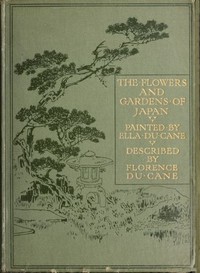
That rainy afternoon, I kept returning to Ellacombe’s notes on rosemary—how Shakespeare used it for remembrance, for weddings and graves alike. The book felt like a quiet garden in itself. Later, half-dreaming, I found myself turning pages of The flowers and gardens of Japan — Inside the Classic, where cherry blossoms carry the same fragile weight of joy and farewell. No connection was intended, yet the seasons seemed to speak to each other.
There are no reviews for this eBook.
There are no comments for this eBook.
Reader reflection
How will you remember this book?
Save your reaction, strongest insight, and memorable passage.
Your progress
0
/
10
2
Did this book hold your interest?
3
Would you pass this book on to a friend?
4
How demanding did the text feel?
5
How distinctive were its ideas or approach?
6
Did any part of the book feel personally relevant?
7
Could you follow the author’s main argument?
8
How much did the book move you?
9
What is the main idea you are taking away?
10