
eBooks
94 Books foundAbout the ECRUT Public Domain Literature Library
The ECRUT Public Domain Literature Library offers 94 works of public-domain botanical and natural history literature. This archive provides access to field guides, scientific studies, and cultural histories of plants, from the British countryside to the American Southwest. Each book arrives with a detailed editorial record, including author, publication date, keywords, and a catalogue note that explains the work's contents and perspective.
Browsing the Archive
Readers can explore the collection through four category guides: Plants Flowers; Trees Forests; Field Botany; and Society, Culture & Customs — Reader's Shelf. Each guide recommends three books, explains why the works belong together, and notes what the category does not cover. A full list of all books is also available for direct search by title or author.
Book records include the Title, Author(s), Publisher (always Project Gutenberg), keywords, and a Catalogue Note that synthesizes the work's content, style, and context. These notes are editorial summaries, not full reviews or literary judgments.
Source Attribution
All texts in this library originate from Project Gutenberg, a digital library of free ebooks. The catalogue notes and editorial materials are prepared as supplementary catalogue material, and are original to this site. No texts have been altered; only editorial framing has been added.
Three Practical Reading Paths
Path One: The Botanical Beginner
Start with Beginners' Botany by Liberty Hyde Bailey for a gentle introduction to plant observation. Then explore Flowers, Shown to the Children for a color-based identification system. Finish with Wild Flowers by Neltje Blanchan, which pairs botany with insect ecology.
Path Two: The Historical Naturalist
Read Erasmus Darwin's 1790 poem The Botanic Garden for an 18th-century view of plant sexuality. Then compare with John Ruskin's Proserpina for a Victorian art-critic's botanical reflections. Finally, see how Nicholas Culpeper's The Complete Herbal blends astrology and medicine.
Path Three: Regional Field Guides
For North American flora, try Wild Flowers of the North-Eastern States by Miller and Whiting. For the Southwest, use Natt Dodge's 100 Desert Wildflowers in Natural Color. For British plants, Edward Step's Wayside and Woodland Trees covers trees and shrubs with folklore.
Navigating the Categories
The four categories organize books by broad theme, but many works could fit multiple categories. For instance, Charles Darwin's climbing plants study appears under Flora, but also relates to field botany. Use the categories as starting points, not rigid containers. The archive offers multiple entry points—browse by category, use the search, or follow a reading path.
Each book record includes a 'target reader' field indicating the intended audience, and keywords that cross-reference subjects. The catalogue notes are written in the first-person perspective of the catalogue project and may reflect opinions that are not authoritative. Readers are encouraged to compare multiple editions and form their own interpretations.
Bibliographic dates and catalogue measurements
The catalogue distinguishes the Project Gutenberg digital release from a work’s original or first publication. Project Gutenberg is identified as the digital source for the edition available here; its release year is therefore shown as Gutenberg Release Year, not as the work’s original publication year.
When an explicit first-publication or issue date can be supported directly by the title or issue information, it may be shown separately as First Publication Year. When that date cannot be confirmed, the catalogue displays Not confirmed rather than guessing a year.
Where the source text can be measured reliably, the catalogue may provide word count and estimated reading time. These measurements describe reading scope and are not quality rankings.
The current catalogue contains 4 active subject categories: Plants Flowers, Trees Forests, Field Botany, and Economic Botany. Categories are browsing aids and may overlap where a work reasonably fits more than one subject.
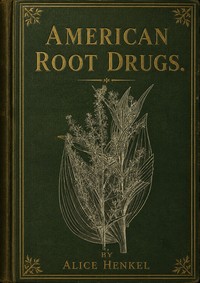

![Cover of The botanist's repository for new and rare plants; vol. 09 [of 10] — Themes and Context](https://ecrut.com/storage/media/covers/pg74978.jpg)
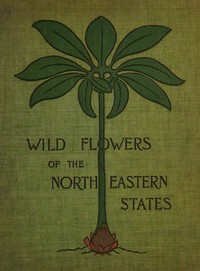
- Featured
![Cover of The botanist's repository for new and rare plants; vol. 07 [of 10] — Context and Discussion](https://ecrut.com/storage/media/covers/pg73371.jpg)
![Cover of The botanist's repository for new and rare plants; vol. 06 [of 10] — A Closer Reading](https://ecrut.com/storage/media/covers/pg73363.jpg)