1

Studies of Trees — Story, Setting & Ideas
(0 User reviews)
757
Project Gutenberg
2005
Not confirmed
Trees
Readers of public-domain and historical texts
Project Gutenberg digital edition
en
Edition facts
Words
45,034
Reading time
196 min
Text sections
10
The catalog record for Studies of Trees — Story, Setting & Ideas provides practical reading context through 45,034 words, 3 hr 16 min estimated reading time, and 10 detected text sections.
The text analysis averages about 19.4 words per sentence, while the detected sections provide another way to judge how the source is divided.
Project Gutenberg metadata also associates the work with “Trees,” connecting these edition facts with the source record’s subject description.
Source:
Project Gutenberg record #16116
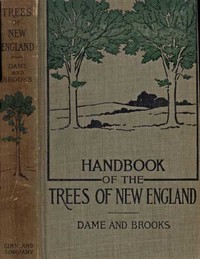
A 1914 handbook by a Yale lecturer and Brooklyn forester, teaching tree identification, structure, diseases, and care through concise, non-technical language and practical observation.
Editorial Edition Score
4.8/5
★★★★★
★★★★★
Calculated from edition completeness, EPUB availability, text structure and catalogue metadata. Not a user rating.
How this score is calculated
- Description quality20 pts
- Title & short description10 pts
- Source metadata20 pts
- Text length15 pts
- Chapters / structure15 pts
- EPUB file integrity20 pts
Total of 100 points, scaled to a 2.5-5.0 range. Editions with an empty description or a missing EPUB file are not scored.
Edition quality
Read the Text
Produced by Thaadd, Ben Beasley and the Online Distributed Proofreading Team at https://www.pgdp.net
BY J.J. LEVISON, M.F. Lecturer on Ornamental and Shade Trees, Yale University Forest School; Forester to the Department of Parks, Brooklyn, N.Y.
FIRST EDITION FIRST THOUSAND
In presenting this volume, the author is aware that there are several excellent books, dealing with one phase or another of tree life, already before the public. It is believed, however, that there is still need for an all-round book, adapted to the beginner, which gives in a brief and not too technical way the most important facts concerning the identification, structure and uses of our more common trees, and which considers their habits, enemies and care both when growing alone and when growing in groups or forests.
In the chapters on the identification of trees, the aim has been to bring before the student only such characters and facts as shall help him to distinguish the tree readily during all seasons of the year. Special stress is laid in each case on the most striking peculiarities. Possible confusion with other trees of similar appearance is prevented as far as possible through comparisons with trees of like form or habit.
Only such information is given concerning the structure and requirements of trees as will enable the reader better to understand the subsequent chapters. In the second half of the book, practical application is made of the student's general knowledge thus acquired, and he is acquainted with the fundamental principles of planting, care, forestry, wood identification and nature study.
The author recognizes the vastness of the field he is attempting to cover and the impossibility of even touching, in a small hand-book of this character, on every phase of tree study. He presumes no further; yet he hopes that by adhering to what is salient and by eliminating the less important, though possibly interesting, facts, he is able to offer a general and elementary _résumé_ of the whole subject of value to students, private owners, farmers and teachers.
In the preparation of Chapter VIII on "Our Common Woods: Their Identification, Properties and Uses," considerable aid has been received from Prof. Samuel J. Record, author of "Economic Woods of the United States." Acknowledgment is also due to the U.S. Forest Service for the photographs used in Figs. 18, 122 to 138 inclusive and 142; to Dr. George B. Sudworth, Dendrologist of the U.S. Forest Service, for checking up the nomenclature in the lists of trees under Chapter V; to Dr. E.P. Felt, Entomologist of the State of New York, for suggestions in the preparation of the section of the book relating to insects; to Dr. W.A. Murrill, Assistant Director of the New York Botanical Gardens, for Fig. 108; and to Mr. Hermann W. Merkel, Chief Forester of the New York Zoological Park, for Figs. 26, 59 and 60.
BROOKLYN, N.Y. June, 1914.
HOW TO IDENTIFY TREES The Pines The Spruce and Hemlock The Red Cedar and Arbor-vitae
HOW TO IDENTIFY TREES (Continued) The Larch and Cypress The Horsechestnut, Ash, and Maple Trees Told by their Form Trees Told by their Bark or Trunk The Oaks and Chestnut
HOW TO IDENTIFY TREES (Continued) The Hickories, Walnut, and Butternut Tulip Tree, Sweet Gum, Linden, Magnolia, Locust, Catalpa, Dogwood, Mulberry, and Osage Orange
THE STRUCTURE AND REQUIREMENTS OF TREES
WHAT TREES TO PLANT AND HOW Trees for the Lawn Trees for the Street Trees for Woodland Trees for Screening
THE CARE OF TREES Insects Injurious to Trees and How to Combat Them Important Insects Tree Diseases Pruning Trees Tree Repair
FORESTRY What Forestry Is and What It Does Care of the Woodland
OUR COMMON WOODS: THEIR IDENTIFICATION, PROPERTIES AND USES Woods Without Pores (Soft woods) Woods with Pores (Hard woods)
AN OUTDOOR LESSON ON TREES
A good many popular books on trees have been published in the United States in recent years. The continually increasing demand for books of this character indicates the growing public interest not only in the trees that we pass in our daily walks, but also in the forest considered as a community of trees, because of its aesthetic and protective value and its usefulness as a source of important economic products.
J. J. Levison, a lecturer at Yale’s Forest School and forester for Brooklyn’s parks, opens his 1914 handbook with a Wordsworth epigram—'Come forth into the light of things, Let Nature be your Teacher'—signaling a practical, observation-driven approach. The preface declares the book aims to fill a gap for beginners, offering 'an all-round book' that covers identification, structure, uses, habits, enemies, and care of common trees. Levison stresses that he includes only 'salient' facts, eliminating 'less important' details to keep the volume brief and elementary. The text is structured for year-round use: special emphasis is placed on 'the most striking peculiarities' of each species, and comparisons prevent confusion with similar trees.
A Forester’s Diagnostic Eye
Levison’s prose is that of a working forester, not a poet. He instructs readers to assess a tree’s health by checking soil moisture, light exposure, and signs of disease: 'spotted leaves and mushroom-like growths or brackets protruding from the bark' are 'sure signs of disease.' He warns that fungi 'cannot manufacture their own food' and 'absorb the food of their host, eventually reducing it to dust.' The language is direct and cautionary: 'If, after a thorough examination, it is found that the ailment has gone too far, it may not be wise to try to save the tree.' Levison’s advice is grounded in observable symptoms—'withering of the leaves,' 'dead tops'—and he repeatedly ties cause to effect, as when he notes that 'an impenetrable cover of concrete or soil' deprives roots of water and air.
The Anatomy of Fungal Attack
Levison devotes careful attention to the mechanics of fungal infestation. He describes the mycelium as 'the most important part of the fungous growth,' explaining that removing the fruiting body alone is futile—'another soon takes its place'—but cutting out the entire mycelium ensures the fungus 'will never come back.' He details how spores are 'carried by the wind or insects to other trees where they take root in some wound or crevice of the bark.' The conditions that favor infestation—'plenty of food, water, warmth and darkness'—are precisely those found in tree wounds and cavities. His remedy is practical: 'keep all wounds well covered with coal tar and to so drain the cavities that moisture cannot lodge in them.' The text is a manual for intervention, not mere description.
Structure and Season: Identifying Trees Year-Round
Levison’s identification method relies on 'characters and facts' that work 'during all seasons of the year.' He avoids relying solely on leaves or flowers, instead training the reader to note bark texture, branching pattern, and overall form. The preface emphasizes that comparisons with 'trees of like form or habit' prevent confusion. This systematic approach reflects Levison’s background in forestry: he treats each tree as a living structure to be read, not a specimen to be named. The book’s second half applies this knowledge to 'planting, care, forestry, wood identification and nature study,' showing that identification is a means to practical ends—selecting the right tree for a location, diagnosing problems, and managing woodlands.
A Handbook for the Practical Student
Levison explicitly addresses his book to 'students, private owners, farmers and teachers.' The tone is instructional but not condescending; he assumes the reader is capable of 'a thorough examination' and sound judgment. He acknowledges that 'no rules can be laid down' for some decisions, such as removing a diseased tree, and that 'much will depend on the local conditions and the judgment and knowledge of the person concerned.' This humility is paired with confidence in the method: the book’s goal is to equip the reader with enough general knowledge to make informed choices. The inclusion of a chapter on wood identification, aided by Prof. Samuel J. Record, underscores the book’s practical bent—it is meant for hands-on use, not armchair study.
Levison’s Studies of Trees is best read with a tree in sight. Its value lies not in literary grace but in the clarity of its diagnostic framework: look for the mycelium, not just the mushroom; check the soil before blaming the leaves. The book rewards a patient, observant reader willing to pause and compare what they see with Levison’s descriptions. For those who work with trees—or simply want to understand why a particular oak is failing—this 1914 manual remains a surprisingly direct and useful companion.
Reading Studies of Trees reminded me of those quiet walks where you start noticing bark textures and branch patterns you’d always overlooked. It lingers in how gently it teaches patience with the living world. That same tender attention seems to live in Some Historic Trees — Themes and Context, where each old trunk feels like a held breath, a story waiting to be remembered.
There are no reviews for this eBook.
There are no comments for this eBook.
Reader reflection
How will you remember this book?
Save your reaction, strongest insight, and memorable passage.
Your progress
0
/
10
2
Did this book hold your interest?
3
How likely are you to recommend this book?
4
How easy was the book to follow?
5
Would you like to discuss this book with someone?
6
How original did the book feel?
7
Did this book create an emotional response?
8
Would you read this book again?
9
What changed or sharpened your thinking?
10