1

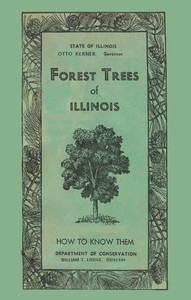
Forest Trees of Illinois: How to Know Them — Context and Discussion
(0 User reviews)
232
Project Gutenberg
2011
Not confirmed
Trees -- Illinois
Readers of public-domain and historical texts
Project Gutenberg digital edition
en
Edition facts
Words
23,778
Reading time
104 min
Text sections
6
For Forest Trees of Illinois: How to Know Them — Context and Discussion, the stored edition analysis reports 23,778 words, 1 hr 44 min estimated reading time, and 6 detected text sections.
The text analysis averages about 16.6 words per sentence, while the detected sections provide another way to judge how the source is divided.
Project Gutenberg metadata also associates the work with “Trees -- Illinois,” connecting these edition facts with the source record’s subject description.
Source:
Project Gutenberg record #37646
This editorial note examines the structure and recurring images in a 1955 pocket manual for identifying Illinois trees, focusing on how the book moves between species descriptions and its use of leaf shape, bark texture, and fruit as diagnostic features.
Editorial Edition Score
4.7/5
★★★★★
★★★★★
Calculated from edition completeness, EPUB availability, text structure and catalogue metadata. Not a user rating.
How this score is calculated
- Description quality20 pts
- Title & short description10 pts
- Source metadata20 pts
- Text length15 pts
- Chapters / structure15 pts
- EPUB file integrity20 pts
Total of 100 points, scaled to a 2.5-5.0 range. Editions with an empty description or a missing EPUB file are not scored.
Edition quality
Read the Text
Produced by Mark C. Orton, Turgut Dincer and the Online Distributed Proofreading Team at http://www.pgdp.net
+-----------------------------------------------------------+ | Transcriber's note: | | | | Names in bold characters are enclosed within plus signs. | +-----------------------------------------------------------+
OTTO KERNER, Governor
A POCKET MANUAL DESCRIBING THEIR MOST IMPORTANT CHARACTERISTICS
Revised by Dr. George D. Fuller, Professor Emeritus of Botany, University of Chicago, Curator of Botany, Illinois State Museum, and State Forester E. E. Nuuttila.
(_1st. ed., 1927, by Mattoon, W. R., and Miller, R. B._)
DEPARTMENT OF CONSERVATION DIVISION OF FORESTRY SPRINGFIELD WILLIAM T. LODGE, Director
(Printed by Authority of the State of Illinois)
Alder, black 19 speckled 19
Ash, black 65 blue 65 green 64 pumpkin 65 red 64 white 64
Aspen, large-tooth 8 quaking 8
Birch, black 21 river 21 white 20 yellow 21
Cedar, northern white 7 red 7
Cherry, black 50 choke 50 wild red 50
Coffee tree, Kentucky 52
Crab, apple 45 Bechtel's 45 prairie 45 sweet 45
Cucumber, magnolia 39
Dogwood, alternate-leaved 61 flowering 61
Elm, American 34 cork 34 red 35 rock 34 slippery 35 water 35 winged 34
Gum, cotton 62 sour 62 sweet 43 tupelo 62
Hackberry 36 southern 36
Hawthorn, cock-spur 47 dotted 47 green 48 red 48
Hickories, key of Illinois 13
Hickory, big shell-bark 16 bitternut 14 Buckley's 18 king-nut 16 mockernut 17 pecan 15 pignut 18 shag-bark 16 sweet pignut 17 water 14 white 17
Hornbeam, American 19 hop 20
Kentucky coffee-tree 52
Larch, American 6 European 6
Locust, black 53 honey 51 water 51
Magnolia, cucumber 39
Maple, ash-leaved 58 black 56
Norway 58 red 57 river 57 silver 57 sugar 56 swamp 57
Mulberry, red 38 Russian 38 white 38
Oak, basket 26 black 29 black jack 32 bur 25 chinquapin 26 jack 29 northern pin 29 northern red 28 overcup 24 pin 30 post 27 red 28 rock chestnut 26 scarlet 30 shingle 33 Shumard's 28 southern red 31 Spanish 31 swamp chestnut 26 swamp Spanish 31 swamp white 25 white 24 willow 33 yellow chestnut 26
Oaks, of Illinois, a key 23
Pine, Austrian 4 jack 5 Scotch 5 shortleaf 5 white 4
Plum, Canada 49 wild 49 wild goose 49 yellow 49
Poplar, balsam 9 Carolina 9 European white 9 Lombardy 9 yellow 40
Service-berry 46 smooth 46
Sumac, shining 55 smooth 55 staghorn 55
Sycamore 44 European 44
Thorn, cock-spur 47 dotted 47 pear 47 Washington 48
Walnut, black 11 white 12
Willow, black 10 crack 10 peach-leaved 10 weeping 10 white 10
See pages 70 and 71 for Index of Scientific Names
+WHITE PINE+ _Pinus strobus_ L.
THE white pine is found along the bluffs overlooking Lake Michigan in Lake and Cook counties and is also scattered along river bluffs in Jo Daviess, Carroll, Ogle and LaSalle counties. The only grove of this beautiful tree in Illinois is in the White Pines Forest State Park near Oregon, Ogle County, where there are trees over 100 years old that have attained a height of 90 feet with a diameter of 30 inches. This tree formerly formed the most valuable forests in the northeastern United States, stretching from Maine through New York to Minnesota. The straight stem, regular pyramidal shape and soft gray-green foliage made it universally appreciated as an ornamental tree and it has been freely planted throughout the State.
The _leaves_, or needles, are 3 to 5 inches in length, bluish-green on the upper surface and whitish beneath, and occur in bundles of 5, which distinguishes it from all other eastern pines. The pollen-bearing _flowers_ are yellow and clustered in cones, about 1/3 inch long at the base of the growth of the season. The seed-producing flowers occur on other twigs and are bright red in color. The cone, or _fruit_, is 4 to 6 inches long, cylindrical with thin usually very gummy scales, containing small, winged seeds which require two years to mature.
The _wood_ is light, soft, durable, not strong, light brown in color, often tinged with red, and easily worked. It was formerly much used in old colonial houses where even the shingles were of white pine. It is excellent for boxes, pattern making, matches, and many other products.
Its rapid growth and the high quality of the wood make it one of the best trees for reforestation on light soils in the northern part of the State. The white pine blister rust was introduced into America about 35 years ago, and has since become widespread and highly destructive of both old trees and young growth.
The Austrian pine, _Pinus nigra_ Arnold, has been naturalized in Lake County and has been planted as an ornamental tree throughout the State. Its leaves in 2's, from 3 to 5 inches long, stiff and dark green. The cone is heavy, 3 inches long with short prickles.
+SHORTLEAF PINE+ _Pinus echinata_ Mill.
THE shortleaf pine, sometimes called yellow pine, occurs in very small stands in the "Pine Hills" of Union County, in Jackson County, in Giant City State Park, and near "Piney Creek" in Randolph County. It forms forests on light sandy soils in Tennessee, Arkansas, Oklahoma and Texas. At maturity, the tree has a tall, straight stem and an oval crown, reaching a height of about 100 feet and a diameter of about 4 feet.
The _leaves_ are in clusters of two or three, from 3 to 5 inches long, slender, flexible, and dark blue-green. The cones are the smallest of our pines, 1-1/2 to 2-1/2 inches long, oblong, with small sharp prickles, generally clustered, and often holding to the twigs for 3 or 4 years. The _bark_ is light brownish-red, broken into rectangular plates on the trunk but scaly on the branches.
Forest Trees of Illinois: How to Know Them, revised in 1955 by George D. Fuller and E. E. Nuuttila, is a pocket manual designed for field identification. Its structure is systematic: each entry follows a consistent pattern—common and scientific name, a brief description of size and range, then detailed notes on bark, leaves, flowers, fruit, and wood uses. The book moves from conifers to broadleaf species, with keys interspersed for oaks and hickories. Recurring images such as leaf shape, bark texture, and fruit form anchor the descriptions, making the manual a practical tool for the reader in the field.
Consistent Entry Structure
Each tree entry in the manual follows a predictable order: after the name, the text typically begins with a statement of typical height and diameter in Illinois, then describes bark, leaves, flowers, fruit, and wood. For example, the sassafras entry opens with “an aromatic tree, usually not over 40 feet in height or a foot in diameter in Illinois,” then moves to bark (“thick, red-brown and deeply furrowed”) and leaves (“one of the few trees having leaves of widely different shape on the same tree”). This repetition of categories creates a rhythm that aids quick comparison between species.
Recurring Images: Leaves and Bark
Leaf shape is a dominant visual motif. The manual highlights distinctive forms: sassafras leaves vary from oval to mitten-shaped to three-lobed; sweet gum leaves are “star-shaped” with 5 to 7 points; sycamore leaves are broad and maple-like. Bark texture is another repeated image: sweet gum bark is “light gray, roughened by corky scales,” while sassafras bark is “thick, red-brown and deeply furrowed.” These tactile descriptions help the reader identify trees by touch as well as sight.
Movement Between Species and Keys
The book alternates between individual species accounts and summary keys. The table of contents lists over 100 species alphabetically by common name, but the text also includes a “key of Illinois” for hickories and a “key” for oaks. These keys group species by contrasting features, such as leaf shape or fruit type, guiding the reader from a general observation to a specific identification. This movement from the specific (a single tree) to the comparative (a group of similar species) mirrors the process of field identification.
Fruit as a Diagnostic Feature
Fruit descriptions recur with precise detail. The sweet gum fruit is “a head… made up of many capsules with projecting spines” that “frequently hangs on the tree by its long swinging stem late into the winter.” The sassafras fruit is “an oblong, dark blue or black, lustrous berry, containing one seed and surrounded at the base by what appears to be a small orange-red or scarlet cup.” These vivid images of fruit form and persistence provide reliable clues even when leaves are absent.
Readers using this manual will benefit from paying attention to the repeated descriptive categories—bark, leaf shape, fruit—that structure each entry. The keys offer a shortcut when a tree’s identity is uncertain, but the individual accounts reward close observation of the specific details that distinguish one species from another. The book’s consistent format makes it a reliable companion for walks through Illinois woodlands.
Holding the Illinois field guide, I found myself pausing over bark sketches and seed shapes, driftng back to afternoons under post oaks. That same patient wonder surfaced later when I opened Forest Trees of Texas: How to Know Them — Edition Insights, and saw how similar hands had mapped a wilder, warmer canopy.
There are no reviews for this eBook.
There are no comments for this eBook.
Reader reflection
Take a moment to reflect on this book
Create a short personal record of your experience with this book.
Your progress
0
/
10
2
How did the book work for you overall?
3
Would you recommend this book to another reader?
4
What was the reading difficulty like?
5
Would you start a conversation about this book?
6
Would a second reading be valuable?
7
What was its emotional impact?
8
Was the book what you thought it would be?
9
In one sentence, what did you learn?
10