1

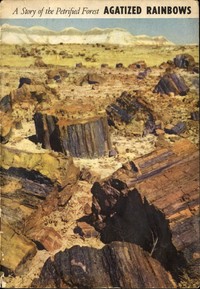
Agatized Rainbows: A Story of the Petrified Forest — Inside the Classic
(0 User reviews)
1085
Project Gutenberg
2016
Not confirmed
Petrified Forest National Park (Ariz.); National parks and reserves -- Arizona; Trees, Fossil -- Arizona
Readers of public-domain and historical texts
Project Gutenberg digital edition
en
Edition facts
Words
8,721
Reading time
38 min
Text sections
1
The catalog record for Agatized Rainbows: A Story of the Petrified Forest — Inside the Classic provides practical reading context through 8,721 words, 38 min estimated reading time, and 1 detected text section.
The text analysis averages about 22.6 words per sentence, while the detected sections provide another way to judge how the source is divided.
Project Gutenberg metadata also associates the work with “Petrified Forest National Park (Ariz.),” connecting these edition facts with the source record’s subject description.
Source:
Project Gutenberg record #51068
Harold J. Brodrick's 1951 guide to Arizona's Petrified Forest National Monument blends natural history, paleontology, and archaeology, using vivid descriptions of agatized wood, Triassic fossils, and Pueblo ruins to reveal the park's layered past.
Editorial Edition Score
4.5/5
★★★★★
★★★★★
Calculated from edition completeness, EPUB availability, text structure and catalogue metadata. Not a user rating.
How this score is calculated
- Description quality20 pts
- Title & short description10 pts
- Source metadata20 pts
- Text length15 pts
- Chapters / structure15 pts
- EPUB file integrity20 pts
Total of 100 points, scaled to a 2.5-5.0 range. Editions with an empty description or a missing EPUB file are not scored.
Edition quality
Read the Text
ess. Bit by bit, water removed wood tissue and in its place left a mineral deposit in exactly the same form as the original, so that when the process had been completed there was no wood left but in its place an exact stone duplicate. This theory was accepted for a very long time, but recently some scientists were not satisfied with it because certain chemical actions that would have to occur during such a process were difficult to explain.
Just prior to 1940, several scientists investigated the process, and from their findings decided that the wood was not petrified by _replacement_ but by the _infiltration_ of mineral-bearing water into the wood and the deposition of this mineral in the air spaces within the wood tissue. This process, they believe, continued until all of the microscopic spaces in the wood were filled solid with this deposit and the petrified log, composed of 98 per cent by volume of mineral deposit and 2 per cent cellulose and lignin wood tissue, was the result. The original wood tissue acted, they think, as a framework to hold the mineral deposit like the walls of a building would act if the rooms and spaces between the walls were filled in solid with liquid concrete. This accounts for retention of the cell structure, annual rings, and other features of the original wood. The petrification of wood has never been studied sufficiently, and there are many questions for which satisfactory answers have not yet been advanced.
Although woods in different localities have been petrified by other minerals, the most common is silica. In the case of this petrified wood, the silica was deposited in an agatized non-crystalline form. The normal color of the silica without mineral stain is a white or gray. Sometimes small amounts of other minerals were in the solution along with silica, or in some cases were brought in during the millions of years of burial as a secondary deposit in the cracks, checks, or other openings in the petrified or partially petrified wood. Iron oxides in small quantities produced the great variety of shades of red, brown, and yellow. The black color in most cases is due to manganese oxide or carbon. Thus, the combination of minerals produced a rainbow of colors in the agatized wood.
Whenever there were small checked places, cracks, or hollows in the wood, we find that they are often either filled or lined with quartz crystals or occasionally with amethyst crystals.
The term “chalcedony” (pronounced kal-sed´-nee) is a broad one usually applied to any compact mass of silica free of definite color pattern, but it is also frequently used to describe all forms of silica whether translucent or opaque, and regardless of color. Agate, therefore, may be considered a variegated chalcedony. Agate is translucent and has a definite color or pattern. Jasper is opaque and may be either red, brown, yellow, blue, or green in color. Quartz minerals are harder than most types of steel, and there are only about 30 other minerals that exceed it in hardness. In the mineral scale of hardness, quartz is rated at 7 and diamond, the hardest of all, at 10. Petrified wood weighs about 166 pounds per cubic foot.
“Who sawed these trees” is one of the questions visitors frequently ask. It is a natural query because most of the logs are cracked into sections, in many instances of rather uniform length, and each broken face is smooth enough to appear almost like a saw cut. At first glance this does give the impression that someone, possibly a Paul Bunyan with an enormous diamond-toothed saw, had cut the logs into “stove wood” lengths. Although there may be some differences of opinion about how this fracturing occurred, the present explanation by scientists is that most of this breakage took place during the period of uplift of this section of the country. The gradual movement and elevation of the earth’s crust caused numerous earthquakes. The shock waves of the tremblor traveling through the earth set up vibrations which caused the deeply buried, brittle, petrified logs to crack. The harmonic vibrations created by the rhythm of the regular shock waves caused the cracks to be rather regularly spaced. At first these cracks were tiny, but centuries later, after the logs were exposed on the surface, the weathering actions and the shifting and settling of the soil beneath them caused the cracks to widen and eventually the fractured sections separated. Occasionally breakage may also occur when soil washes out from under one end of a log and its weight causes it to sag and crack. The normal fracture line of this material is at right angles to the lineal axis, and the rather smooth face causes the broken surface to appear much like a saw cut.
Harold J. Brodrick opens Agatized Rainbows with a telling vignette: a ranger intercepts a visitor trying to take a “teeny weeny piece” of petrified wood, explaining that 350,000 annual visitors would soon strip the forest bare. This small drama sets the tone for a book that is part natural history, part conservation plea, and part travelogue. Published in 1951 by the Petrified Forest Museum Association, the text guides readers through the monument’s three “forests,” each distinguished by the color and density of its fossilized logs. Brodrick, a park naturalist, writes with an insider’s familiarity, weaving geology, paleontology, and archaeology into a compact narrative that never loses sight of the landscape’s fragility.
Rainbow Logs and Triassic Time
Brodrick’s descriptions of petrified wood emphasize color above all. He refers to “logs of rainbow hues” and “colorful petrified log sections,” drawing attention to the agatized silica that replaced ancient wood cell by cell. The text identifies specific locations—First Forest, Second Forest, Blue Forest—each with its own palette. A photograph caption notes that erosion has carved a 45-foot span under a log called Agate Bridge, now supported by a beam. Brodrick does not explain the geochemical process in detail; instead, he lets the visual spectacle carry the science. The Triassic origin of these trees is mentioned only in passing, as a backdrop to the more immediate experience of walking among the fallen giants.
Desert Life and Seasonal Blooms
The monument’s living inhabitants receive careful attention. Brodrick catalogs spring wildflowers—mariposa lilies, evening primroses, desert mallow—and notes that displays depend on moisture. He contrasts the “sluggish reptiles and amphibians in the Triassic” with modern pronghorn antelope, coyotes, and the bright green-backed Bailey collared lizard, which visitors often mistake for poisonous. Birds range from the tiny Allen hummingbird to the golden eagle. This section grounds the fossil forest in a functioning ecosystem, reminding readers that the petrified logs are not relics but part of a living landscape that changes with the seasons.
Pueblo Ruins and Ancient Trade
Brodrick shifts to archaeology, describing pre-Columbian Pueblo sites scattered across the monument. He notes that over 300 ruin sites have been located, including a 125-room structure near the Puerco River. Pottery fragments date occupation from about 500 to 1400 A.D. One ruin, Agate House, was built from chunks of petrified wood and partially reconstructed in 1934. Brodrick speculates about trade networks, noting that similar pottery types appear across the Southwest. He also mentions a great drought from 1275 to 1299, which may have driven people away, but he leaves the final cause uncertain. The section ties human history to the same landscape that preserves the fossil trees.
Brodrick’s guide is best read as a period piece—a snapshot of how the Petrified Forest was presented to mid-century tourists. The ranger’s plea at the start echoes throughout: this is a place to be seen, not taken. Readers interested in the monument’s geology or archaeology will find a concise introduction, but the book’s real value lies in its voice, which captures the wonder and the tension of a natural wonder under pressure.
The rain drummed on the porch roof while I finished Brodrick’s chapter on petrified junipers, their rings turned to stone but still readable. That lingering thought about trees that outlast themselves followed me to the shelf. Later, I found myself leafing through Forest Trees of Texas: How to Know Them — Edition Insights, its plain line drawings a quiet counterpoint to all that agate. Just wood, still growing.
There are no reviews for this eBook.
There are no comments for this eBook.
Reader reflection
What did you think of this book?
Answer a few questions and save a private reflection on this device.
Your progress
0
/
10
2
What was your overall reaction to the book?
3
Would you pass this book on to a friend?
4
What was the reading difficulty like?
5
Would you read this book again?
6
How much did the book move you?
7
Which element worked best for you?
8
Did the book give you something worth debating?
9
What changed or sharpened your thinking?
10