1

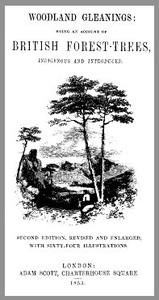
Woodland Gleanings: Being an Account of British Forest-Trees — Themes and Context
(0 User reviews)
2486
Project Gutenberg
2012
Not confirmed
Trees -- Great Britain -- Identification; Forests and forestry -- Great Britain
Readers of public-domain and historical texts
Project Gutenberg digital edition
en
Edition facts
Words
63,244
Reading time
275 min
Text sections
10
Before opening Woodland Gleanings: Being an Account of British Forest-Trees — Themes and Context, the edition data offers a quick orientation: 63,244 words, 4 hr 35 min estimated reading time, and 10 detected text sections.
The text analysis averages about 24.7 words per sentence, while the detected sections provide another way to judge how the source is divided.
Project Gutenberg metadata also associates the work with “Trees -- Great Britain -- Identification,” connecting these edition facts with the source record’s subject description.
Source:
Project Gutenberg record #41175
Robert Tyas's 1853 guide to British forest-trees blends botanical description, literary quotation, and practical cultivation advice, with a distinctive narrative voice that shifts between scientific precision and poetic reflection.
Editorial Edition Score
4.8/5
★★★★★
★★★★★
Calculated from edition completeness, EPUB availability, text structure and catalogue metadata. Not a user rating.
How this score is calculated
- Description quality20 pts
- Title & short description10 pts
- Source metadata20 pts
- Text length15 pts
- Chapters / structure15 pts
- EPUB file integrity20 pts
Total of 100 points, scaled to a 2.5-5.0 range. Editions with an empty description or a missing EPUB file are not scored.
Edition quality
Read the Text
Groves were planted to console at noon The pensive wanderer in their shades. At eve The moonbeam sliding softly in between The sleeping leaves, is all the light he wants For meditation.
Indeed, no species of landscape is so fitted for meditation. The forest attracts the attention by its grandeur, and the park scene by its beauty; while the paths through copses, dells, and thickets, are too close, devious, interrupted, and often too beautiful to allow the mind to be at perfect ease. But the uniform sameness of the grove leaves the eye disengaged; and the feet wandering at pleasure, where they are confined by no path, want little direction. The mind, therefore, undisturbed, has only to retire within itself. Hence the philosopher, the devotee, the poet, all retreated to these quiet recesses; and,
from the world retired, Conversed with angels and immortal forms.
In classic times, the grove was the haunt of gods; and in the days of Nature, before art had introduced a kind of combination against her, men had no idea of worshipping God in a temple made with hands. The _templum nemorale_ was the only temple he knew.
In the resounding wood, All vocal beings hymned their equal God.
And to this idea, indeed, one of the earliest forms of the artificial temple seems to have been indebted. Many learned men have thought the Gothic arch of our cathedral churches was an imitation of the natural grove. It arises from a lofty stem, or from two or three stems, if they be slender; which being bound together, and spreading in every direction, cover the whole roof with their ramifications. In the close recesses of the beechen grove, we find this idea the most complete. The lofty, narrow aisle--the pointed arch--the clustered pillar, whose parts separating without violence, diverge gradually to form the fretted roof--find there perhaps their earliest archetype. Bryant has wrought out this idea in a beautiful fragment, entitled "God's First Temples:"
The groves were God's first temples. Ere man learned To hew the shaft, and lay the architrave, And spread the roof above them,--ere he framed The lofty vault, to gather and roll back The sound of anthems,--in the darkling wood, Amidst the cool and silence he knelt down, And offered to the Mightiest solemn thanks And supplication. For his simple heart Might not resist the sacred influences, That, from the stilly twilight of the place, And from the gray old trunks, that, high in heaven, Mingled their mossy boughs, and from the sound Of the invisible breath that swayed at once All their green tops, stole over him, and bowed His spirit with the thought of boundless Power And inaccessible Majesty. Ah, why Should we, in the world's riper years, neglect God's ancient sanctuaries, and adore Only among the crowd, and under roofs That our frail hands have raised! Let me, at least, Here in the shadow of this aged wood, Offer one hymn--thrice happy, if it find Acceptance in his ear.
Robert Tyas's Woodland Gleanings opens with a poetic epigraph that sets a contemplative tone: 'Attractive is the Woodland scene, / Diversified with trees of every growth— / Alike yet various.' This second edition, revised and enlarged, includes sixty-four illustrations and covers thirty-two species, from the majestic Oak to the humble Hawthorn. Tyas explicitly aims to 'convey general and particular information' while 'imparting a new interest to the Woodland,' a goal that shapes the book's alternating rhythms of technical description and literary allusion.
A Voice That Shifts Between Botanist and Poet
Tyas's narrative voice is notably dual. In the Mulberry entry, he moves from a dry botanical account—'specific characters of the White-fruited Mulberry are—Leaves with a deep scallop at the base'—to a lengthy quotation of verse describing the tree's cautious habits: 'But cautiously the Mulberry did move, / And first the temper of the skies would prove.' This juxtaposition is not merely decorative; it reflects Tyas's method of using poetry to animate botanical facts. The Oak chapter similarly opens with Churchill's couplet—'The Oak, when living, monarch of the wood; / The English Oak, when dead, commands the flood'—before launching into a description of the tree as 'the emblem of grandeur, strength, and duration.' The effect is a layered text where scientific observation and literary sentiment coexist, sometimes jarringly, as when a discussion of timber value gives way to a classical fable.
Pacing Through Practical and Ornamental Details
The book's pace varies markedly between sections. In the Mulberry account, the rhythm slows for a detailed description of silkworm cultivation: 'the trees are never allowed to grow higher than three or four feet, being cut down to the ground every year.' This practical advice contrasts with the leisurely, almost meditative passages on ornamental properties, such as the note that the Mountain-Ash, though 'secondary rank in point of dimensions,' earns its place for its 'prominent station in the ornamental and picturesque departments.' Tyas also accelerates when listing botanical characters, using terse, formulaic phrases like 'Leaves with a deep scallop at the base, and either cordate or ovate.' These shifts in tempo create a reading experience that alternates between brisk identification and reflective appreciation.
Recurring Patterns in Structure and Evidence
Each species entry follows a consistent pattern: a poetic epigraph, a botanical description, historical remarks, and practical notes on cultivation and timber use. This structure provides a predictable framework, but Tyas varies the emphasis. For the Oak, he leads with a grand claim about its 'king of forest trees' status, supported by a Roman poet's lines. For the Mulberry, he foregrounds the fable of Pyramus and Thisbe, then adds the white-fruited variety's role in sericulture. The recurring inclusion of 'remarkable trees'—such as the 'two lovers slain' reference—shows Tyas's interest in anecdotal evidence alongside empirical data. He also frequently cites 'our best authors' without naming them, creating a sense of shared authority that invites the reader to trust his curated selections.
Readers approaching Woodland Gleanings should expect a work that is part field guide, part literary anthology. Tyas's voice is that of a knowledgeable enthusiast who values both the scientific and the sentimental. The book rewards browsing: one can dip into any tree entry and find a mix of precise description and unexpected quotation. Pay attention to the illustrations, which are referenced but not described in the text, and to the way Tyas uses poetry to underscore the character of each species.
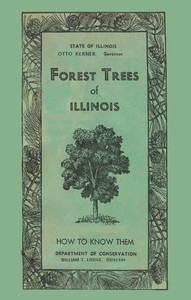
That rainy Thursday, the Tyas volume kept circling back to the same line from Cowper about the "creaking" of old oaks, and I found myself drifting to a later shelf. Its pages were worn thinner, a pocket guide from the American prairie. That unexpected leap from Sutton Park to Illinois felt like one tree’s shadow reaching clean across an ocean. Forest Trees of Illinois: How to Know Them — Context and Discussion turned out to have the exact same quiet patience.
There are no reviews for this eBook.
There are no comments for this eBook.
Reader reflection
What was your reading experience?
Capture what you thought, learned, and would like to remember.
Your progress
0
/
10
2
How much did you enjoy the reading experience?
3
Would you encourage someone else to read it?
4
Did the language feel accessible?
5
What did you appreciate most?
6
Did it raise ideas you would like to talk about?
7
How clearly were the main ideas presented?
8
How personally connected did you feel to the book?
9
Which lesson or insight stayed with you?
10