1

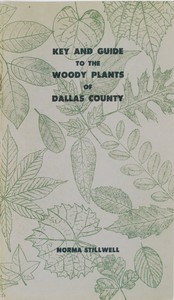
Key and Guide to Native Trees, Shrubs, and Woody Vines of Dallas County — Inside the Classic
(0 User reviews)
759
Project Gutenberg
2019
Not confirmed
Trees -- Texas; Shrubs -- Texas; Woody plants -- Texas -- Dallas County -- Identification
Readers of public-domain and historical texts
Project Gutenberg digital edition
en
Edition facts
Words
15,708
Reading time
69 min
Text sections
4
This digital edition of Key and Guide to Native Trees, Shrubs, and Woody Vines of Dallas County — Inside the Classic is described by source-level measurements including 15,708 words, 1 hr 9 min estimated reading time, and 4 detected text sections.
The text analysis averages about 14.1 words per sentence, while the detected sections provide another way to judge how the source is divided.
Project Gutenberg metadata also associates the work with “Trees -- Texas,” connecting these edition facts with the source record’s subject description.
Source:
Project Gutenberg record #58703
This 1939 field guide by Norma Stillwell uses a dichotomous key and concise descriptions to identify about 90 woody plants native to Dallas County, Texas, emphasizing structure, habitat, and seasonal features.
Editorial Edition Score
4.5/5
★★★★★
★★★★★
Calculated from edition completeness, EPUB availability, text structure and catalogue metadata. Not a user rating.
How this score is calculated
- Description quality20 pts
- Title & short description10 pts
- Source metadata20 pts
- Text length15 pts
- Chapters / structure15 pts
- EPUB file integrity20 pts
Total of 100 points, scaled to a 2.5-5.0 range. Editions with an empty description or a missing EPUB file are not scored.
Edition quality
Read the Text
h, small, from a slightly branched central stalk. Fruit: black, spherical, smooth, dry, about ¼ inch across. L (p. 223) (_S. glabra_). M (p. 240.)
204. GREENBRIER (_Smilax bona nox_ L.) abundant vine; locally called stretchberry, saw-brier, cat-brier. Habitat: woodlands and thickets, becoming especially obnoxious in heavily pastured woodlands. Leaves: 1½ to 4½ inches long, ½ to 3 wide, alternate, oval or somewhat heart-shaped, margins entire; smooth, thick, shining, many remaining green and some mottled with brown in winter; all primary veins running lengthwise of leaf. Stems: long, evergreen, often very prickly, climbing by tendrils. Flowers: small, inconspicuous, yellowish or greenish, dioecious, in umbels, six “petals”. Fruit: black, shining or covered with a bloom, round or nearly so, size of small peas. This vine’s greatest virtue seems to be that it offers food and shelter to the birds.
205. YUCCA, bear-grass, Spanish dagger (_Yucca_ species) more than one species in the county; abundant in meadows and along roadsides. Leaves: grasslike but large, thick and tough, in rosettes, often with white threads on margins; sharp-pointed. Woody stem: very short in our species. Flowers: greenish white or creamy, many along a central stalk two or three feet tall; each cupped flower about an inch or two long, fertilized by a small white moth which lays its egg inside. Fruit: a short, thick, cylindrical pod containing layers of flat, black seeds.
206. WILLOW (_Salix nigra_ Marsh.) the black willow is probably the only native species growing in the county. The weeping willow (_Salix babylonica_) has not been observed growing in the county except where planted. Willows grow close to water or in low ground, are very common and grow very rapidly where they have an abundant supply of water; very valuable in checking soil erosion as their roots help to hold the soil in place. Leaves: simple, alternate, 3 to 6 inches long, ⅛ to ¾ wide, acuminate, with fine, incurved serrations. Bark: rough, shaggy on old trees, usually light brown. Twigs: conspicuously yellowish orange in winter, smooth or glossy, very slender. Flowers: in catkins, yellowish, dioecious. Fruit: cottony-covered seeds. Wood: soft, light, weak, used for a special charcoal in manufacturing gunpowder, some species for artificial limbs.
207. COTTONWOOD (_Populus deltoides_ var. _virginiana_ Sudw.) common, large tree, also called Carolina poplar. Habitat: prefers lowlands and stream banks although will grow in dry soil. Leaves: simple, alternate, 3 to 5 inches each way, commonly glossy on both sides, broad and straight across at the base, coarsely toothed or crenate, stems flattened. Bark: thick, light gray, deeply furrowed on trunks to smooth and yellowish green on branches. Twigs: stout, greenish yellow to pale gray, smooth; lenticels large, pale, lengthwise; buds large, scales very sticky-resinous. Flowers: staminate are red catkins, pistillate greenish yellow, dioecious. Fruit: cottony-covered seeds. Wood: soft, light weight, warps easily but cheap because of rapid growth of tree; new methods of rapid kiln-drying have lessened warping.
208. BLACK WALNUT (_Juglans nigra_ L.) tree, common in rich bottomlands. Leaves: alternate, pinnately compound, one to two feet long, 15 to 23 leaflets, each about 3 inches long, tapering and toothed; with a characteristic odor when crushed. Bark: thick, dark, rough. Twigs: have dark, chambered pith shown by splitting lengthwise through center. Flowers: greenish, male in catkins, female inconspicuous, both kinds on the same tree. Fruit: green to black husk does not split, round; shell rough, very hard, dark; nut rich and sweet. Wood: hard, strong, rich brown color, very valuable for gunstocks, furniture, etc.
209. PECAN (_Carya pecan_ Engl. & Graebn.) abundant, the state tree. Habitat: rich bottomlands preferred. Leaves: similar to black walnut but average fewer leaflets, 9 to 17. Twigs: do not have dark, chambered pith. Bark: somewhat variable in appearance but generally lighter in color than walnut and not as flaky as soapberry both of which it resembles. Fruit: very valuable crop in Texas, many cultivated varieties tending toward larger size of nuts and thinner shell. Wood: not valuable, hard but brittle and not strong.
210. BITTER PECAN (_Carya texana_ Schn.) rare tree of low woodlands. The nuts are 4-angled and the seeds bitter. Wood tough and strong.
211. HICKORY (_Carya buckleyi_ Durand) uncommon in this county. Observed in sandy woods. Leaves: pinnately compound, of 5 to 9 leaflets, the terminal 4 to 6 inches long, 2 to 2¼ wide, twice as large as the lowest, obovate and tapering at each end. Bark: dark, rough, close. Fruit: resembles pecan but broader; shell thick, somewhat wrinkled, light in color; seed sweet. Wood: hard, brittle, little used except for fuel.
White Oak Group: _Fruit requires 1 year to mature; leaves without sharp points to lobes_ (_except chinquapin oak leaves_). Bark: _usually lighter gray than on black or red oaks_.
Norma Stillwell’s 1939 guide to the woody plants of Dallas County opens with a practical premise: there are only about ninety species to learn, far fewer than the county’s birds or insects, and these plants stay put for year-round observation. The book’s structure mirrors that patience. It begins with a dichotomous key—a series of paired choices about leaf arrangement, flower type, or fruit shape—that leads the reader to a species entry. Each entry then follows a fixed order: leaves, twigs, bark, flowers, fruit, and wood. This repetition trains the eye to notice the same details across different plants, turning a walk in the woods into a disciplined act of looking.
A Key That Teaches Observation
The key is the book’s backbone, and Stillwell designed it for beginners. It starts with broad choices—leaves simple or compound—then narrows to finer points like leaf margin, fruit type, or twig texture. For example, the entry for Ptelea trifoliata (wafer ash) notes that its twigs are “dark, glossy, resembling cherry” and its winter buds “rounded, whitish.” These details are not just identifiers; they are lessons in what to look for. The key does not assume prior knowledge. It builds a vocabulary of bark, bud, and leaf shape through repetition. A reader who works through several species will begin to see the county’s woodlands as a set of interlocking forms, each with its own signature.
Recurring Details Across Species
Stillwell’s descriptions are economical but precise, and certain motifs recur. Gland-dotted leaves and fruits appear repeatedly—in river locust (Amorpha fruticosa), wafer ash, and others—linking plants across families. The guide also notes human uses: prickly ash bark was “used by negroes for toothache and rheumatism,” wafer ash fruit “occasionally used in place of hops.” These asides ground the botany in local practice. Another recurring feature is the attention to bark texture: “smooth, bluish gray, conspicuous for its corky, cone-shaped knobs” (prickly ash) versus “dark and shining but cracks and curls, becoming rough” (wafer ash). Such comparisons sharpen the reader’s ability to distinguish similar species.
Movement Between Habitats
The guide traces a quiet geography of Dallas County. Species are tied to specific settings: “rich lowlands,” “low, moist ground,” “low woodlands,” “woods or fields.” The prickly ash is “common in rich lowlands, ‘of its largest size on the rich intervale lands of the streams flowing into the Trinity River.’” The chinaberry, though cultivated, “occasionally escaped from cultivation” and is “sometimes found in remote woods where birds must have dropped the seeds.” These habitat notes create a mental map of the county’s varied terrain—from river bottoms to upland depressions—and show how each plant finds its place. The reader moves from one microhabitat to another, learning to read the landscape as a mosaic of growing conditions.
Seasonal Rhythms in the Descriptions
Stillwell’s entries often note when a plant flowers or fruits, building a seasonal calendar. The chinaberry blooms “in April or May,” its fruit “remaining into winter.” The wafer ash flowers “in midsummer” and its “drooping clusters conspicuous on winter branches.” These temporal markers remind the reader that identification is not static: a plant looks different in leaf, in flower, and in fruit. The guide encourages return visits. The entry for smooth sumac (Rhus glabra) mentions it is “abundant tall shrub, in woods or fields, prefers lowlands but also common in shallow depressions of uplands.” Such notes link season to location, so the reader can anticipate where and when to look for each species.
The Logic of Scientific Names
Stillwell includes scientific names for every species, but she is careful to explain why: “not with any thought that they should be memorized … but to avoid the possibility of misunderstandings.” She notes that many plants have more than one common name, and one common name can refer to different plants. The scientific name, by contrast, is stable. She also explains the structure—genus, species, variety—and the abbreviation for the botanist who first described the plant. This section is a quiet lesson in taxonomy, but it never feels like a lecture. It is framed as a practical tool for clarity, not a requirement. The reader is free to use common names, but the scientific name is always there as a reference point.
Stillwell’s guide is best used outdoors, with a plant in hand. The key works by elimination: start at the first choice and follow the path. If a description mentions gland-dotted leaves or corky bark, look for those features. The book does not need to be read straight through. Dip into it by habitat or season, and let the repeated details train your eye. Over time, the ninety species will become familiar neighbors, each with its own shape, texture, and place in the county’s landscape.
That rainy afternoon, tracing Stillwell’s key through bare twigs and weathered bark, I felt winter’s quiet insistence on structure over show. The guide’s patient logic lingered, and I found myself wanting that same stillness prolonged—so I turned, almost without thinking, to Studies of trees in winter — A Reader’s Guide. One book simply handed me to the next.
There are no reviews for this eBook.
There are no comments for this eBook.
Reader reflection
What did you think of this book?
Answer a few questions and save a private reflection on this device.
Your progress
0
/
10
2
How did the book work for you overall?
3
Would you encourage someone else to read it?
4
How demanding did the text feel?
5
How clear did the writing feel?
6
Would this book work well in a reading group?
7
Did this book create an emotional response?
8
How original did the book feel?
9
In one sentence, what did you learn?
10