1

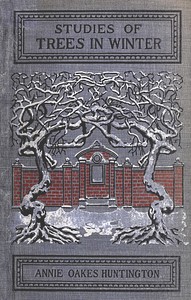
Studies of trees in winter — A Reader’s Guide
(0 User reviews)
1051
Project Gutenberg
2024
Not confirmed
Trees -- North America; Trees in winter
Readers of public-domain and historical texts
Project Gutenberg digital edition
en
Edition facts
Words
35,223
Reading time
154 min
Text sections
23
For Studies of trees in winter — A Reader’s Guide, the stored edition analysis reports 35,223 words, 2 hr 34 min estimated reading time, and 23 detected text sections.
The text analysis averages about 22.1 words per sentence, while the detected sections provide another way to judge how the source is divided.
Project Gutenberg metadata also associates the work with “Trees -- North America,” connecting these edition facts with the source record’s subject description.
Source:
Project Gutenberg record #72953
This editorial note examines how Huntington's opening, middle, and later excerpts guide a first reading of her winter tree study, focusing on the interplay between technical description and aesthetic appreciation.
Editorial Edition Score
4.8/5
★★★★★
★★★★★
Calculated from edition completeness, EPUB availability, text structure and catalogue metadata. Not a user rating.
How this score is calculated
- Description quality20 pts
- Title & short description10 pts
- Source metadata20 pts
- Text length15 pts
- Chapters / structure15 pts
- EPUB file integrity20 pts
Total of 100 points, scaled to a 2.5-5.0 range. Editions with an empty description or a missing EPUB file are not scored.
Edition quality
Read the Text
I. THE STUDY OF TREES IN WINTER 3
Trunk and branches. Stems and twigs. Leaf-scars. Bundle-scars. Buds.
II. THE HORSECHESTNUT 15
The Horsechestnut. The Ohio Buckeye.
Sugar or Rock Maple. Red or Swamp Maple. White or Silver Maple. Striped Maple or Moosewood. Ash-leaved Maple or Box Elder. Norway Maple. Sycamore Maple.
The White or American Ash. Red or Downy Ash. Black Ash. European Ash.
V. THE WALNUTS AND HICKORIES 45
Butternut. Black Walnut. Shagbark or Shellbark Hickory. Mockernut or Whiteheart Hickory. Bitternut Hickory. Pignut Hickory.
VI. THE BIRCHES, HOP HORNBEAM, AND HORNBEAM 59
Canoe, Paper, or White Birch. American, Gray, or White Birch. Black or Sweet Birch. Yellow Birch. Red or River Birch. Dwarf Birch. European White Birch. Hop Hornbeam, Ironwood. Hornbeam, Blue Beech.
VII. THE BEECH, CHESTNUT, AND OAKS 77
American Beech. European Beech. Chestnut Oak. White Oak. Swamp White Oak. Mossy-cup, Overcup, or Bur Oak. Chestnut or Rock Chestnut Oak. Dwarf Chestnut Oak. Post or Rough Oak. Black Oak. Red Oak. Pin Oak. Scrub Oak.
VIII. THE ELMS AND THE HACKBERRY 101
American or White Elm. Slippery or Red Elm. Cork or Rock Elm. English Elm. Scotch, Dutch, or Wych Elm. Hackberry, Sugarberry, Nettle tree.
IX. THE BUTTONWOOD, THE TUPELO, AND THE MULBERRIES 117
Buttonwood, Sycamore, or Plane tree. Tupelo, Pepperidge, Sour Gum tree. Flowering Cornel, Flowering Dogwood. Red Mulberry. White Mulberry.
X. THE LOCUSTS, THE YELLOWWOOD, AND THE KENTUCKY COFFEE TREE 129
Common Locust. Honey Locust. Yellowwood. Kentucky Coffee tree. Laburnum. Judas tree.
XI. THE LINDENS, THE LIQUIDAMBER, AND THE SASSAFRAS 141
Linden, Basswood. European Linden. Liquidamber, Sweet Gum. Hamamelis. Sassafras.
XII. THE MAGNOLIA AND TULIP TREE, THE CATALPA, THE AILANTHUS, AND THE ARALIA 153
Swamp Magnolia, Sweet Bay. Umbrella tree. Cucumber tree. Tulip tree. Catalpa. Ailanthus, Tree of Heaven. Angelica tree, Hercules’ Club.
XIII. THE APPLE TREE, PEAR TREE, MOUNTAIN ASH, CHERRY TREE, AND THE SHAD BUSH 167
Common Apple tree. Common Pear tree. Mountain Ash, or Rowan tree. Wild Black Cherry. Choke Cherry. Pin Cherry. Peach tree. Shad Bush. Service Berry, June Berry.
XIV. THE WILLOWS AND POPLARS 177
White Willow. Weeping Willow. Black Willow. Aspen, American Aspen. Large-toothed Aspen. Balm of Gilead, Balsam Poplar. Cottonwood, Necklace, or Carolina Poplar. Lombardy Poplar. White Poplar.
American Larch. Tamarack or Hackmatack. European Larch.
LIST OF ILLUSTRATIONS
Swamp White Oak. _Quercus platanoides_ _Frontispiece_
Cross section of a tree. (Colored plate) 4
Horsechestnut. _Æsculus hippocastanum_ 14
Horsechestnut shoot 16
Section of a Horsechestnut bud. (Colored plate) 18
The Maples. (Colored plate) 20
Sugar Maple. _Acer saccharum_ 22
Trunk of a young Sugar Maple 23
Red Maple. _Acer rubrum_ 24
Trunk of a young Red Maple 25
Silver Maple. _Acer saccharinum_ 26
Moosewood Maple. _Acer pennsylvanicum_ 28
Norway Maple. _Acer platanoides_ 30
Sycamore Maple. _Acer pseudo-platanus_ 32
The Ashes. (Colored plate) 34
American Ash. _Fraxinus americana_ 36
Walnuts and Hickories. (Colored plate) 44
Butternut. _Juglans cinerea_ 46
Trunk of a Butternut 47
Black Walnut. _Juglans nigra_ 48
Trunk of a Black Walnut 49
Shagbark Hickory. _Hicoria ovata_ 50
Trunks of Shagbark Hickories 51
Mockernut Hickory. _Hicoria alba_ 52
Bitternut Hickory. _Hicoria minima_ 54
Pignut Hickory. _Hicoria glabra_ 56
Canoe Birch. _Betula papyrifera_ 58
Gray Birches. _Betula populifolia_ 60
Black Birch. _Betula lenta_ 62
Yellow Birch. _Betula lutea_ 64
Red Birch. _Betula nigra_ 66
European White Birch. _Betula alba_ 68
Hop Hornbeam. _Ostrya virginiana_ 70
Hornbeams. _Carpinus caroliniana_ 72
The Beech and Chestnut. (Colored plate) 76
Beech trees. _Fagus americana_ 78
Trunk of a young Beech 80
Chestnut. _Castanea dentata_ 82
The Oaks. (Colored plate) 83
White Oak. _Quercus alba_ 84
Trunk of a White Oak 86
Mossy-cup Oak. _Quercus macrocarpa_ 88
A young Post Oak. _Quercus minor_ 90
Black Oak. _Quercus velutina_ 92
Red Oak. _Quercus rubra_ 94
Trunk of a Red Oak 96
Pin Oak. _Quercus palustris_ 98
The American and Slippery Elms. (Colored plate) 100
American Elm. _Ulmus americana_ 102
Young Cork Elm. _Ulmus racemosa_ 106
English Elms. _Ulmus campestris_ 108
Scotch Elm. _Ulmus montana_ 110
Hackberry. _Celtis occidentalis_ 112
Buttonwood stem and bud. (Colored plate) 116
Buttonwood. _Platanus occidentalis_ 118
Trunk of a Buttonwood 119
Tupelo. _Nyssa sylvatica_ 120
Red Mulberry. _Morus rubra_ 122
White Mulberry. _Morus alba_ 124
The Locusts. (Colored plate) 128
Common Locust trees. _Robinia pseud-acacia_ 130
Honey Locust. _Gleditsia triacanthos_ 132
Kentucky Coffee tree. _Gymnocladus dioicus_ 134
Linden, Liquidamber, and Sassafras. (Colored plate) 140
American Linden. _Tilia americana_ 142
Liquidamber. _Liquidambar styraciflua_ 144
Sassafras. _Sassafras sassafras_ 146
Trunk of a Sassafras 148
Magnolia and Tulip tree. (Colored plate) 152
Tulip tree. _Liriodendron tulipifera_ 156
Catalpa. _Catalpa speciosa_ 158
Ailanthus. _Ailanthus glandulosa_ 160
Hercules’ Club. _Aralia spinosa_ 162
Mountain Ash. _Pyrus americana_ 166
A young Black Cherry tree. _Prunus serotina_ 170
White Willows. _Salix alba_ 176
Aspens. _Populus tremuloides_ 180
American Larch. _Larix americana_ 186
European Larch. _Larix europæa_ 188
When Miss Huntington told me last year that she was going to write a book about the trees in their winter aspects, knowing how conscientiously she had studied her subject and how successful she had been in imparting the results of her observation to others, I felt sure that she would do a useful and excellent piece of work, and that her book would be of real assistance to all persons who want to gain some knowledge of the trees which they pass in their daily walks.
Annie Oakes Huntington's Studies of Trees in Winter opens with a striking claim: the American and English elms are 'really more beautiful in winter than in summer.' This assertion immediately frames the book's purpose—to reveal the structural elegance of deciduous trees when their leaves are gone. The opening chapter, 'The Study of Trees in Winter,' promises a systematic approach, covering trunk, branches, twigs, leaf-scars, bundle-scars, and buds. Yet the excerpt on elms shows that Huntington balances technical detail with lyrical observation, describing the American elm's 'strength and lofty stateliness' and its varied forms—Etruscan vase, plume, oak, and feathered. This dual focus sets the tone for a work that is both a field guide and a celebration of winter silhouettes.
A Systematic Yet Personal Approach
The table of contents reveals a clear structure: chapters progress from general study to specific genera, each covering multiple species. The elm chapter, for instance, treats American, slippery, cork, English, and Scotch elms, each with a concise description of twigs, buds, and bark. However, Huntington does not merely list facts. She notes that the American elm 'stands absolutely alone among trees for its especial kind of beauty,' and she identifies distinct shapes—vase, plume, oak, feathered—that arise from growing conditions. This blend of taxonomy and personal observation suggests that readers should expect both precise identification cues and reflective commentary on the trees' character.
The Role of Illustrations and Photographs
The title page credits Mary S. Morse for 'colored plates' and the author for photographs. In the elm excerpt, a photograph of the Lancaster elm illustrates the Etruscan vase form. This visual evidence is integral: Huntington describes shapes that are best seen, not just read. The mention of 'feathered' elms arising from 'latent buds which may have been dormant for years' hints at the book's attention to growth processes. For a first reader, the images likely serve as essential companions to the text, making abstract descriptions concrete. The interplay between word and image is a key feature of the work.
Winter as a Revealing Season
Huntington's focus on winter is not arbitrary. She argues that the season reveals 'every detail of the great arching limbs and slender pendulous branches,' as quoted from Charles S. Sargent's introduction. The elm's beauty is tied to its bare structure: the contrast between 'little twigs and the little branches' is hidden by leaves in summer. This perspective guides the reader to look for branching patterns, bud placement, and bark texture—features often overlooked. The book thus trains the eye to see trees as architectural forms, not just leafy canopies. The emphasis on winter as a time of clarity is a recurring theme.
Evidence from the Elms: A Case Study
The elm chapter offers a microcosm of Huntington's method. She describes the American elm's trunk dividing 'a short distance from the ground into many large, spreading branches,' and notes that the tree's shapes are so varied that 'many people think that each form is a separate species.' This observation underscores her goal: to teach readers to recognize unity within diversity. She also mentions the tree's susceptibility to insects and its association with 'beautiful old valley towns and hillside villages of New England.' Such details ground the botanical description in cultural and ecological context. A first reader can use this chapter as a model for approaching others.
As you read Studies of Trees in Winter, pay attention to how Huntington moves between the general and the specific. The opening chapters establish a vocabulary for winter identification, while later entries apply it to individual species. The excerpts suggest that the book rewards slow, patient reading—preferably with a tree in sight. Let the photographs and plates anchor your understanding, and note how the author's enthusiasm for her subject never overshadows the precision of her observations.
Winter has its own grammar. Huntington’s study taught me that a bare branch is a sentence waiting for patience, and every reading of her opening excerpts feels like turning a key in a familiar lock. That same quiet hush lingers over Trees of the Northern United States Their Study, Description and Determination — A Reader’s Guide, where identification becomes a kind of reverence, not merely a task. Both whisper the same truth: we only truly see a tree when it has shed everything else.
There are no reviews for this eBook.
There are no comments for this eBook.
Reader reflection
How did this book work for you?
Your answers remain private and are stored only in this browser.
Your progress
0
/
10
2
Did this book hold your interest?
3
How likely are you to recommend this book?
4
How easy was the book to follow?
5
Did the book give you something worth debating?
6
Which element worked best for you?
7
How did the pace of the book feel?
8
Would a second reading be valuable?
9
What is the main idea you are taking away?
10