1

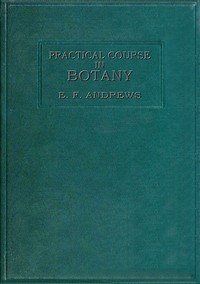
A practical course in botany — Context and Discussion
(0 User reviews)
298
Project Gutenberg
2026
Not confirmed
Plants; Botany -- Textbooks
Readers of public-domain and historical texts
Project Gutenberg digital edition
en
Edition facts
Words
112,327
Reading time
489 min
Text sections
31
The catalog record for A practical course in botany — Context and Discussion provides practical reading context through 112,327 words, 8 hr 9 min estimated reading time, and 31 detected text sections.
The text analysis averages about 18.2 words per sentence, while the detected sections provide another way to judge how the source is divided.
Project Gutenberg metadata also associates the work with “Plants,” connecting these edition facts with the source record’s subject description.
Source:
Project Gutenberg record #78430
A 1911 botany textbook that emphasizes practical applications in agriculture, economics, and sanitation, using common cultivated plants for dissection and urging conservation of wild flora.
Editorial Edition Score
4.9/5
★★★★★
★★★★★
Calculated from edition completeness, EPUB availability, text structure and catalogue metadata. Not a user rating.
How this score is calculated
- Description quality20 pts
- Title & short description10 pts
- Source metadata20 pts
- Text length15 pts
- Chapters / structure15 pts
- EPUB file integrity20 pts
Total of 100 points, scaled to a 2.5-5.0 range. Editions with an empty description or a missing EPUB file are not scored.
Edition quality
Read the Text
I. THE STORAGE OF FOOD IN SEEDS 1
II. SOME PHYSIOLOGICAL PROPERTIES OF SEEDS 10
III. TYPES OF SEEDS 12
IV. SEED DISPERSAL 21
CHAPTER II. GERMINATION AND GROWTH
I. PROCESSES ACCOMPANYING GERMINATION 29
II. CONDITIONS OF GERMINATION 33
III. DEVELOPMENT OF THE SEEDLING 40
CHAPTER III. THE ROOT
I. OSMOSIS AND THE ACTION OF THE CELL 53
II. MINERAL NUTRIMENTS ABSORBED BY PLANTS 58
III. STRUCTURE OF THE ROOT 61
IV. THE WORK OF ROOTS 65
V. DIFFERENT FORMS OF ROOTS 72
I. FORMS AND GROWTH OF STEMS 81
II. MODIFICATIONS OF THE STEM 88
B. HERBACEOUS DICOTYLS 102
C. WOODY STEMMED DICOTYLS 107
IV. THE WORK OF STEMS 112
V. WOOD STRUCTURE IN ITS RELATION TO INDUSTRIAL USES 118
CHAPTER V. BUDS AND BRANCHES
I. MODES OF BRANCHING 131
III. THE BRANCHING OF FLOWER STEMS 141
I. THE TYPICAL LEAF AND ITS PARTS 147
II. THE VEINING AND LOBING OF LEAVES 154
III. TRANSPIRATION 160
IV. ANATOMY OF THE LEAF 164
VI. THE LEAF AN ORGAN OF RESPIRATION 174
VII. THE ADJUSTMENT OF LEAVES TO EXTERNAL RELATIONS 177
VIII. MODIFIED LEAVES 189
CHAPTER VII. THE FLOWER
I. DISSECTION OF TYPES WITH SUPERIOR OVARY 196
II. DISSECTION OF TYPES WITH INFERIOR OVARY 204
III. STUDY OF A COMPOSITE FLOWER 210
IV. SPECIALIZED FLOWERS 214
V. FUNCTION AND WORK OF THE FLOWER 219
VI. HYBRIDIZATION 223
VII. PLANT BREEDING 230
VIII. ECOLOGY OF THE FLOWER
A. THE PREVENTION OF SELF-POLLINATION 235
B. WIND POLLINATION 239
C. INSECT POLLINATION 241
D. PROTECTIVE ADAPTATION 245
I. HORTICULTURAL AND BOTANICAL FRUITS 250
II. FLESHY FRUITS 255
IV. ACCESSORY, AGGREGATE, AND MULTIPLE FRUITS 265
CHAPTER IX. THE RESPONSE OF THE PLANT TO ITS SURROUNDINGS
I. ECOLOGICAL FACTORS 271
II. PLANT ASSOCIATIONS 277
III. ZONES OF VEGETATION 288
CHAPTER X. CRYPTOGAMS
I. THEIR PLACE IN NATURE 296
VIII. THE RELATION BETWEEN CRYPTOGAMS AND SEED PLANTS 354
IX. THE COURSE OF PLANT EVOLUTION 359
1. SYSTEMATIC BOTANY 364
2. WEIGHTS, MEASURES, AND TEMPERATURES 367
I. THE STORAGE OF FOOD IN SEEDS
MATERIAL.—In addition to the four food tests described in Exps. 1-6, there should be provided some raw starch, a solution of grape sugar, the white of a hard-boiled egg, and any fatty substance, such as lard or oil. For Exps. 8 and 9, a little diastase solution will be necessary. “Taka” diastase, made from rice acted upon by a fungus, can be obtained for a trifle at almost any drug store.
LIVING MATERIAL.—Grains of corn and wheat, and seeds of some kind of bean, the larger the better. The “horse bean” (_Vicia faba_), if it can be obtained, makes an excellent object for study, as the cells are so large that they can be seen with the naked eye. For showing the presence of proteins (aleurone grains) and oily matter, use thin cross sections through the kernel of a castor bean or a Brazil nut. Specimens for the study of the individual cell will be found in the hairs growing on squash seedlings, in the epidermis of one of the inner coats of an onion, in the roots of oat or radish seedlings, or in the section of a young corn root.
A compound microscope will be required for this study.
=1. The economic importance of seeds.=—As a source of food to both man and the lower animals, the importance of seeds can hardly be overrated. All the flour, meal, rice, hominy, and other breadstuffs sold in the market come from them, to say nothing of the fleece from the cotton seed that clothes the greater part of the world, besides furnishing a substitute for lard and an important food for cattle. The oils and fats stored in nuts are also to be taken into account, the peanut alone yielding the greater part of the so-called olive oil of commerce. Since the value of our farm crops depends largely upon the kind and quantity of these substances furnished by them, it is worth our while, as a matter of economic as well as scientific interest, to learn something about the nature of the different foods contained in plants.
Eliza Frances Andrews’s 1911 textbook explicitly frames botany as a discipline with direct bearing on agriculture, economics, and sanitation. The preface argues that avoiding technical terms fosters “a slovenly habit of mind,” insisting that students master precise vocabulary rather than seek roundabout substitutes. Andrews also voices a conservationist plea: she urges teachers to help stop the “relentless persecution” that has “practically exterminated many of our choicest wild plants,” blaming Sunday excursionists and the automobile for opening “the most secret haunts of nature.”
A Conservationist Stance in an Era of Expansion
Andrews’s preface reveals a tension between the textbook’s practical, agricultural focus and a protective attitude toward native plants. She writes that flowers can be studied “to better purpose in their living, active state than as dead subjects for dissection,” and she selects specimens mainly from “common cultivated kinds” to spare wild flora. The automobile, she notes, has laid open “the most secret haunts of nature” to destructive incursions. This conservationist thread is unusual for a period when many botany manuals treated wild plants as inexhaustible resources. Andrews positions the teacher as “the most potent factor” in halting the extinction of wild species, linking botanical education directly to environmental stewardship.
Precision Over Fear of Terminology
Andrews devotes a full paragraph in the preface to defending technical language. She dismisses “a mere superstitious fear of words because they happen to be a little new or unfamiliar,” arguing that avoiding terms leads to “careless and inaccurate modes of expression” and wastes time. This pedagogical stance shapes the entire course: the text introduces terms like chlorophyll, modification, and adaptation without apology, and the practical questions require students to apply them. For example, students are asked to explain why leaves curl backward in withering (referencing section 182) and to reconcile apparent inconsistencies about evergreen distribution (questions 11–13). The book thus trains students to think precisely, not merely to memorize.
Observation-Driven Practical Questions
The excerpt from Chapter VIII on modified leaves includes fifteen practical questions that demand local observation and reasoning. Students must compare leaves of shade-loving versus sun-loving plants, report on leaf movements in species like mimosa and partridge pea, and determine which trees shed leaves centripetally. Several questions require consulting earlier sections (e.g., 99, 194, 203) to form explanations, reinforcing the textbook’s internal cross-referencing system. The material list for modified leaves suggests obtaining sundew, Venus’s-flytrap, or sarracenia from a florist—again emphasizing accessible, often cultivated specimens. These exercises train students to see botany as an active, investigative science grounded in their own environment.
Andrews’s course rewards readers who engage with its cross-references and local fieldwork. The practical questions are not afterthoughts but the core of the method: they ask students to reconcile textbook principles with what they find in their own neighborhoods. Readers should approach the book with a notebook and a willingness to observe leaves, twigs, and seasonal changes firsthand. The conservationist preface also invites reflection on how botanical study can coexist with preserving the plants it examines.
Flipping through this old textbook, I remembered pressing wildflowers with my grandmother, her warning to take only what we needed. The same quiet reverence returned when I later opened Flowers, Shown to the Children — Key Ideas to Explore, where the delicate illustrations felt less like lessons and more like whispered introductions to old, dear friends. Both books ask us to look closely, gently, before the world moves on.
There are no reviews for this eBook.
There are no comments for this eBook.
Reader reflection
Your personal reading reflection
Build a private reading journal entry for this title.
Your progress
0
/
10
2
Did this book hold your interest?
3
Is this a title you would suggest to others?
4
How demanding did the text feel?
5
Was the book moving at the right speed?
6
Did the book deliver what you hoped for?
7
Did it raise ideas you would like to talk about?
8
How understandable was the text?
9
In one sentence, what did you learn?
10