1

Wild flowers of the north-eastern states — A Reader’s Guide
(0 User reviews)
112
Project Gutenberg
2024
Not confirmed
Plants -- Northeastern States; Wild flowers -- Northeastern States
Readers of public-domain and historical texts
Project Gutenberg digital edition
en
Edition facts
Words
74,504
Reading time
324 min
Text sections
313
Before opening Wild flowers of the north-eastern states — A Reader’s Guide, the edition data offers a quick orientation: 74,504 words, 5 hr 24 min estimated reading time, and 313 detected text sections.
The text analysis averages about 21.5 words per sentence, while the detected sections provide another way to judge how the source is divided.
Project Gutenberg metadata also associates the work with “Plants -- Northeastern States,” connecting these edition facts with the source record’s subject description.
Source:
Project Gutenberg record #73825
An 1895 botanical guide to 308 wildflowers of the northeastern US, emphasizing visual recognition through detailed descriptions of habit, leaf texture, color, and flower arrangement, with life-size illustrations, written for non-scientific observers.
Editorial Edition Score
4.9/5
★★★★★
★★★★★
Calculated from edition completeness, EPUB availability, text structure and catalogue metadata. Not a user rating.
How this score is calculated
- Description quality20 pts
- Title & short description10 pts
- Source metadata20 pts
- Text length15 pts
- Chapters / structure15 pts
- EPUB file integrity20 pts
Total of 100 points, scaled to a 2.5-5.0 range. Editions with an empty description or a missing EPUB file are not scored.
Edition quality
Read the Text
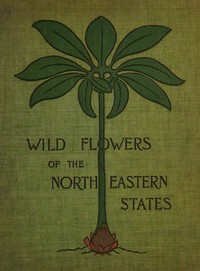
WILD FLOWERS OF THE NORTH-EASTERN STATES
BEING THREE HUNDRED AND EIGHT INDIVIDUALS COMMON TO THE NORTH-EASTERN UNITED STATES, DRAWN AND DESCRIBED FROM LIFE BY
ELLEN MILLER AND MARGARET CHRISTINE WHITING
------ WITH THREE HUNDRED AND EIGHT ILLUSTRATIONS THE SIZE OF LIFE ------
G. P. PUTNAM’S SONS NEW YORK LONDON 27 WEST TWENTY-THIRD STREET 24 BEDFORD STREET, STRAND
The Knickerbocker Press
COPYRIGHT, 1895 BY G. P. PUTNAM’S SONS
The Knickerbocker Press, New York
MARY GOODRICH WHITING
It was with no desire to compete with scientific botanies that this collection of flowers was gathered together, but with the hope of making their acquaintance more easy to non-scientific folk than the much condensed manuals of our flora are able to do. The opportunity of introducing a plant, with that graceful amplitude which forestalls human meetings, is denied to the scientific botanist by the needful restrictions of his formulæ, and there remain unnoted by him (because beyond the scope of a special terminology) numberless traits of race-habit, and personal details of growth belonging to the plants, to which the unlearned observer will attach a degree of significance, incommensurate, perhaps, to their scientific value. To the simple Nature-lover each growth possesses a personal quality more desirable than the catalogued facts of its existence, and which offers an invitation to his thought beyond the knowledge he may gain from books.
Supplementary, then, to the scientific classification, there is a place for the mere lover and observer, who shall display the results of his study in the most direct terms, that require no glossaries of explanation, nor, if it may be avoided, any dissection of flower-growths. Too often the amateur is dismayed, in his effort to name a plant, by the botanical need of a microscopic analysis, which calls for a preliminary training, and in its process destroys the flower he seeks to know. If it were possible for a pictorial botany to be prepared for English readers in the common vocabulary, the destructive element which, at present, occupies a painfully large place in the study of all popular science, might be confined to the needs of the higher student, and no longer pursued by children, or the merely curious observers of our common forms of life. The effort to verify what has already been established, which, in some intellectually alert localities, threatens the more delicate of our annuals and biennials with extermination, might be avoided, if we were able to recognize the commoner sorts of plants by their general character, their gesture, color, and habits, leaving scientific analysis for serious study.
The present collection of flowers common to the North-eastern United States, which was started as a personal pastime, has taken its present shape under the belief that it were well to make a beginning towards a floral portrait-gallery; it is from this point of view, rather than from the purely botanical, that the drawings have been made and the descriptions written. Days have been pleasantly spent in searching for a specimen which would show most typically the particular trick of growth, the characteristic gesture which individualized it from all other plants; often a flower has been drawn and described as it grew, surprised in its familiar haunt. Effort has been made to gather within the prescribed limits as great a diversity of growths, and as many variations of types in each family, as was feasible. Because of the desire to localize the collection, somewhat, the flowers of the seaboard have been excluded. A few shrubs, and even one small tree, the Witch Hazel, have been included, because their flowers or fruit form such essential features in the floral calendar, or possess so strong a hold upon the wayfarers’ affections, that their presence has seemed inevitable. In the case of two vines, the Carrion Flower and the Virginia Creeper, the drawings were made from the fruit (companioned by the figure of the single flower) for the obvious reason that the blossoms of the one are inconspicuous, and of the other so malodorous, they offer small temptations to a near acquaintance, while both are recompensed with highly decorative berry-clusters. The drawings of the flowers are the size of life; in every possible instance the growth also is given without reduction.
That every flower-lover will find some favorites omitted, is altogether probable, in a selection of three hundred individuals from among the hosts which invite representation. The extreme dry weather of the previous season must be held accountable for several noteworthy, and much regretted, blanks in the list.
Ellen Miller and Margaret C. Whiting open their 1895 guide with a clear purpose: to help non-scientific folk identify wildflowers without resorting to microscopes or technical jargon. They argue that scientific manuals, constrained by formulaic language, overlook what they call 'race-habit' and 'personal details of growth'—the subtle gestures, colors, and textures that a simple nature-lover finds meaningful. This editorial note examines how the authors' descriptive choices, from the 'gray-green' of a goldenrod leaf to the 'homely green' of another, reveal a deliberate method of making plants recognizable through everyday observation rather than dissection.
Diction of Color and Texture
The authors consistently pair color with texture, creating a tactile visual vocabulary. A leaf is not merely green but 'gray-green' (Plume Goldenrod), 'yellowish-green' (Common Goldenrod), or 'homely green' (White Goldenrod). The stem of Noble Goldenrod is 'a fine dark red'; the stalk of Plume Goldenrod is 'light yellow-green' and 'shining.' These precise modifiers serve as mnemonics: the reader can recall the 'rough-downy' feel of Common Goldenrod's stem or the 'smooth, round, and shining' stalk of Plume Goldenrod. Such details, while scientifically minor, are central to the authors' goal of making acquaintance 'more easy.'
Gesture and Habit as Identifying Traits
Beyond static features, Miller and Whiting describe how each plant carries itself. White Goldenrod's 'gesture deserves the name of “rod” more nearly than its more graceful sisters,' because its bloom begins at the tip of a club-shaped spike. Plume Goldenrod's leaves 'spring from the stalk with a noticeable arch,' and its flower heads form 'a long, spreading, curving plume.' The authors note that Common Goldenrod's branchlets are 'curving,' while Noble Goldenrod's leaf midrib is 'strong and curving, and a trifle taut, which fulls the blade.' These observations of posture—arching, curving, fulling—give each species a distinct silhouette, reinforcing the idea that plants have 'personal quality' beyond catalogued facts.
Structure and Arrangement of Flower Heads
The descriptions pay careful attention to how flowers are arranged on the stem. In White Goldenrod, 'the small heads are gathered in crowded groups, set in the angles of the small, pale, upper leaves, forming a long club-shaped spike.' Plume Goldenrod's heads are 'arranged, in little spires, along the upper sides of slender stems.' Common Goldenrod's heads 'grow on curving branchlets in a many-sided plume.' Noble Goldenrod's heads are 'rather large' with '5 or 6' rays. The authors also note the order of blooming: in one species, 'the buds opening in the center first.' Such structural details allow the reader to distinguish species by the architecture of the inflorescence, not just by flower color.
Leaf Morphology and Arrangement
Each entry describes leaf shape, margin, texture, and arrangement with consistent terminology. Leaves are 'narrow, and tapering to a point at both ends' (White Goldenrod), 'lance-shaped, long-pointed at either end' (Plume Goldenrod), or 'long and narrow, and tapers at both ends' (Noble Goldenrod). Margins are 'entire,' 'notched,' or 'entire, the edge being a little rough.' The authors note whether leaves 'sit close upon the stalk' or 'spring from the stalk with a noticeable arch,' and whether they are 'alternate' in arrangement. Texture is described as 'thin,' 'coarse,' 'fine and thick,' and color as 'gray-green,' 'yellowish-green,' or 'yellow-green.' These details, while systematic, are presented in plain language, avoiding botanical jargon.
Miller and Whiting's approach—emphasizing gesture, color, texture, and arrangement over microscopic analysis—offers a model for field identification that prioritizes visual memory over technical keying. Readers are encouraged to observe plants as individuals, noting the arch of a leaf or the feel of a stem, rather than relying solely on flower parts. This guide remains a useful companion for those who wish to know wildflowers by their 'personal quality,' as the authors put it, without destroying the specimen in the process.
I remember the patience in that old guide, the way it taught me to see a flower’s leaf before its name. It felt like a kinship with something slower. That same quiet thread runs through The Chain of Life in Geological Time A Sketch of the Origin and Succession of Animals and Plants — Inside the Classic, where each bloom is just a small pause in a much longer sentence. Both whisper the same secret, if you listen.
There are no reviews for this eBook.
There are no comments for this eBook.
Reader reflection
Your personal reading reflection
Build a private reading journal entry for this title.
Your progress
0
/
10
2
Was reading this book enjoyable?
3
Would you encourage someone else to read it?
4
What was the reading difficulty like?
5
What was its emotional impact?
6
Would this book work well in a reading group?
7
Did the book deliver what you hoped for?
8
What did you appreciate most?
9
Which lesson or insight stayed with you?
10