1

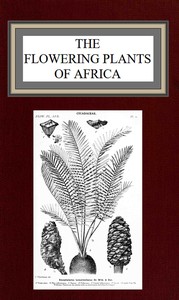
The flowering plants of Africa An analytical key to the genera of African phanerograms — Context and Discussion
(0 User reviews)
1178
Project Gutenberg
2022
Not confirmed
Plants -- Africa; Angiosperms -- Africa
Readers of public-domain and historical texts
Project Gutenberg digital edition
en
Edition facts
Words
226,645
Reading time
986 min
Text sections
57
For The flowering plants of Africa An analytical key to the genera of African phanerograms — Context and Discussion, the stored edition analysis reports 226,645 words, 16 hr 26 min estimated reading time, and 57 detected text sections.
The text analysis averages about 6.9 words per sentence, while the detected sections provide another way to judge how the source is divided.
Project Gutenberg metadata also associates the work with “Plants -- Africa,” connecting these edition facts with the source record’s subject description.
Source:
Project Gutenberg record #69049
A 1915 analytical key to African flowering plant genera, using visible characters for field identification, with 150 plates by Joseph Fleischmann. Covers distribution, uses, and synonyms for over 200 families, emphasizing practical use by colonists and travellers.
Editorial Edition Score
4.9/5
★★★★★
★★★★★
Calculated from edition completeness, EPUB availability, text structure and catalogue metadata. Not a user rating.
How this score is calculated
- Description quality20 pts
- Title & short description10 pts
- Source metadata20 pts
- Text length15 pts
- Chapters / structure15 pts
- EPUB file integrity20 pts
Total of 100 points, scaled to a 2.5-5.0 range. Editions with an empty description or a missing EPUB file are not scored.
Edition quality
Read the Text
THE FLOWERING PLANTS OF AFRICA
THE FLOWERING PLANTS OF AFRICA
AN ANALYTICAL KEY TO THE GENERA OF AFRICAN PHANEROGAMS
WITH 150 PLATES AND A MAP
DULAU & CO., LTD. 37 SOHO SQUARE, LONDON 1915
_ALL RIGHTS RESERVED_
The flora of Africa being now comparatively well known, the author of the present work considered the time opportune to present to the public an analytical key for determining in an easy way the generic name of every phanerogamous plant growing wild, whether indigenous or naturalized, or cultivated upon a large scale within the geographical limits of Africa including the islands.
The names and limits of the genera and families adopted in this work are those accepted in ENGLER & PRANTL’S “Die natürlichen Pflanzenfamilien,” the most recent work containing the description of all genera of flowering plants, and its supplement “Genera Siphonogamarum” by DALLA TORRE & HARMS.
As the present work is intended for the use not only of botanists, but also of colonists and travellers in Africa, who take an interest in botany, I have used, wherever it was possible, as distinctive characters, those which are visible to the naked eye in a plant in flower, being careful, however, not to deviate too much from the natural system.
Besides the diagnostic characters of the genera, I have also indicated the approximative number of the species described to the end of the year 1910, their geographical distribution, their uses, and their more important synonyms.
As to the terms used in indicating the geographical distribution of African plants, “North Africa” (including North-west-and North-east Africa) means all northern extratropical Africa, “South Africa” (including South-west and South-east Africa) southern extratropical Africa, “tropical Africa” Africa within the tropics, including all islands, whereas the continent of Africa within the tropics including only the small islands in the proximity of the coast, is designated by “Central Africa.”
The present work was originally published in German under the title “Die Blütenpflanzen Africas” (Berlin, R. Friedländer & Sohn, 1908). A new edition being desirable, I have preferred the English language, and I am indebted to Dr. A. B. RENDLE, of the British Museum, for revising my translation.
The plates were drawn by the Vienna artist JOSEPH FLEISCHMANN from herbarium specimens kindly lent from the collections of the Hofmuseum at Vienna and the Jardin botanique de l’Etat at Brussels by their respective keepers Dr. A. ZAHLBRUCKNER and Dr. E. DE WILDEMAN. Drawings already published have been used for a few plates only; these are duly indicated.
VIENNA (AUSTRIA), September 1913.
LIST OF PRINCIPAL WORKS CONSULTED
A. ENGLER & K. PRANTL, Die natürlichen Pflanzenfamilien (Leipzig, 1889-1908).
C. G. DE DALLA TORRE & H. HARMS, Genera Siphonogamarum (Leipzig, 1900-1907).
A. ENGLER, Syllabus der Pflanzenfamilien, 6. ed. (Berlin, 1909).
--Das Pflanzenreich (Leipzig, 1900-1910).
--Monographien afrikanischer Pflanzenfamilien und-gattungen (Leipzig, 1898-1904).
--Die Vegetation Afrikas (Berlin, 1908-1910).
G. BENTHAM & J. D. HOOKER, Genera plantarum (London, 1862-1883).
J. D. HOOKER & B. D. JACKSON, Index Kewensis plantarum phanerogamarum (Oxford, 1895-1908).
A. DE CANDOLLE, Prodromus systematis naturalis regni vegetabilis (Paris, 1824-1873).
C. S. KUNTH, Enumeratio plantarum (Stuttgart, 1833-1850).
G. WALPERS, Repertorium botanices systematicae (Leipzig, 1842-1847).
--Annales botanices systematicae (Leipzig, 1848-1868).
A. & C. DE CANDOLLE, Monographiae phanerogamarum (Paris, 1878-1896).
H. BAILLON, Histoire des plantes (Paris, 1867-1895).
TH. DURAND & H. SCHINZ, Conspectus florae Africae (Bruxelles, 1895-1898).
R. DELILE, Flore d’Egypte (Paris, 1810).
E. BOISSIER, Flora orientalis (Basel, 1867-1888).
P. ASCHERSON & G. SCHWEINFURTH, Illustrations de la flore d’Egypte (Le Caire, 1887).
E. SICKENBERGER, Contributions à la flore d’Egypte (Le Caire, 1901).
E. DURAND & G. BARRATTE, Florae Libycae prodromus (Genève, 1910).
J. A. BATTANDIER & TRABUT, Flore de l’Algérie (Alger, 1888-1910).
--Flore de l’Algérie et de la Tunisie (Alger, 1902).
W. TRELEASE, Botanical observations on the Azores (St. Louis, 1897).
R. T. LOWE, A manual flora of Madeira (London, 1868).
PH. BARKER-WEBB & S. BERTHELOT, Phytographia Canariensis (Paris, 1836-1840).
J. PITARD & L. PROUST, Les îles Canaries (Paris, 1908).
D. OLIVER & W. T. THISELTON-DYER, Flora of tropical Africa (London, 1868-1910).
J. MILDBREAD, Wissenschaftliche Ergebnisse der deutschen Central-Africa-Expedition; Botanik (Berlin, 1910).
A. ENGLER, Die Pflanzenwelt Ostafrikas (Berlin, 1895).
A. RICHARD, Tentamen florae Abyssinicae (Paris, 1847).
R. PIROTTA, Flora della colonia Eritrea (Roma, 1903-1908).
J. A. GRANT & D. OLIVER, The botany of the Speke and Grant expedition. (London, 1872-1875).
W. PETERS, Naturwissenschaftliche Reise nach Mozambik (Berlin, 1862-1864).
TH. SIM, Forest flora and forest resources of Portuguese East Africa (Aberdeen, 1909).
J. B. BALFOUR, Botany of Socotra (Edinburgh, 1888).
H. FORBES, The natural history of Socotra and Abdelkuri (Liverpool, 1903).
F. VIERHAPPER, Beiträge zur Kenntniss der Flora Südarabiens und der Inseln Socotra, Semha und Abdelkuri (Wien, 1907).
J. A. SCHMIDT, Beiträge zur Flora der kapverdischen Inseln (Heidelberg, 1852).
J. A. GUILLEMIN, S. Perrotet, & A. Richard, Florae Senegambiae tentamen (Paris, 1830-1833).
J. PALISOT BEAUVOIS, Flore d’Oware et de Benin (Paris 1804).
W. J. HOOKER, Niger flora (London, 1849).
H. POBEGUIN, Essai sur la flore de la Guinée française (Paris, 1906).
Franz Thonner's 1915 key to African phanerogams is built around a single practical premise: that a plant in flower can be identified by characters visible to the naked eye. The work deliberately avoids microscopic features, aiming instead at colonists and travellers who 'take an interest in botany' but lack a botanist's equipment. This orientation shapes every entry: the key emphasizes flower structure, leaf arrangement, and fruit type over technical details. The 150 plates, drawn by Joseph Fleischmann from herbarium specimens at Vienna and Brussels, provide visual anchors for the genera described.
A Key Designed for the Field
Thonner's key is structured as a series of dichotomous choices, leading the user from family to genus. The preface states that wherever possible, 'distinctive characters' are those 'visible to the naked eye in a plant in flower.' This is a deliberate departure from the microscopic anatomy then common in systematic botany. The key covers both indigenous and naturalized species, as well as plants 'cultivated upon a large scale.' Genera are grouped under families following Engler & Prantl's Die natürlichen Pflanzenfamilien, but the key itself is designed for rapid sorting in the field. For example, the entry for Acer (maple) notes four species in northwest Africa, yielding timber, tanning bark, and sugar, and serving as ornamentals—a concise summary of economic and ornamental value.
Geographic and Economic Notes
Each genus entry includes the approximate number of species described up to 1910, their geographical distribution, uses, and important synonyms. Thonner defines 'North Africa' as northern extratropical Africa, 'South Africa' as southern extratropical Africa, and 'tropical Africa' as the region within the tropics including islands. 'Central Africa' refers to the continental tropics plus small coastal islands. The economic notes are terse but informative: Cardiospermum (heartseed) yields fodder, vegetables, oil, and medicaments; Didierea from Madagascar provides timber. These details reflect the key's intended audience of settlers and travellers who might encounter plants for practical use.
Visual and Structural Aids
The 150 plates by Joseph Fleischmann are based on herbarium specimens from the Hofmuseum in Vienna and the Jardin botanique de l'État in Brussels. The key also includes a statistical table, a glossary of botanical terms, abbreviations of authors' names, a list of popular names, and an index. The typography uses indentation and numbering to guide the user through the dichotomous choices. For instance, under Sapindaceae, the key branches at 'Ovary with 1 fertile cell' versus 'Ovary with 2-8 fertile cells,' then further subdivides by ovule number and flower symmetry. This layered structure allows the user to narrow down possibilities systematically, even without prior botanical training.
Readers approaching this key should note its date: 1915. Taxonomic boundaries have shifted since then, and some genera have been reclassified. The key is best used as a historical snapshot of early twentieth-century African botany, complemented by modern field guides. The plates and the glossary remain valuable references, but the geographic definitions and species counts reflect knowledge available at the time. For contemporary identification, cross-reference with current floras is advisable.
Rain fell against the window while I puzzled through Fleischmann’s keys, matching petals to genera. His plain lists of uses felt almost medicinal. Later, drying my hands, I recalled an old volume’s promise of herbs both healing and occult—a gentler, stranger companion to that strict African flora. The Complete Herbal To which is now added, upwards of one hundred additional herbs, with a display of their medicinal and occult qualities physically applied to the — Story, Setting & Ideas waited, forgiving, on the shelf.
There are no reviews for this eBook.
There are no comments for this eBook.
Reader reflection
What did you think of this book?
Answer a few questions and save a private reflection on this device.
Your progress
0
/
10
2
How did the book work for you overall?
3
Would you recommend this book to another reader?
4
Did the language feel accessible?
5
Could you see yourself revisiting this book?
6
Would this book work well in a reading group?
7
Which part made the strongest impression?
8
How understandable was the text?
9
What did this book teach you most?
10