1

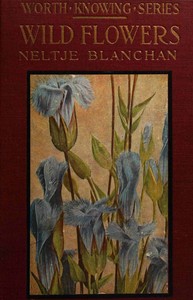
Wild Flowers Worth Knowing — Context and Discussion
(0 User reviews)
72
Project Gutenberg
2005
Not confirmed
Wild flowers -- North America
Readers of public-domain and historical texts
Project Gutenberg digital edition
en
Edition facts
Words
70,230
Reading time
306 min
Text sections
11
The catalog record for Wild Flowers Worth Knowing — Context and Discussion provides practical reading context through 70,230 words, 5 hr 6 min estimated reading time, and 11 detected text sections.
The text analysis averages about 21.9 words per sentence, while the detected sections provide another way to judge how the source is divided.
Project Gutenberg metadata also associates the work with “Wild flowers -- North America,” connecting these edition facts with the source record’s subject description.
Source:
Project Gutenberg record #8866
An adaptation of Neltje Blanchan's 'Nature's Garden' that examines wildflowers through the lens of their evolutionary strategies, emphasizing how each plant's structure, habitat, and interactions with insects reveal a purposeful design for survival and reproduction.
Editorial Edition Score
4.8/5
★★★★★
★★★★★
Calculated from edition completeness, EPUB availability, text structure and catalogue metadata. Not a user rating.
How this score is calculated
- Description quality20 pts
- Title & short description10 pts
- Source metadata20 pts
- Text length15 pts
- Chapters / structure15 pts
- EPUB file integrity20 pts
Total of 100 points, scaled to a 2.5-5.0 range. Editions with an empty description or a missing EPUB file are not scored.
Edition quality
Read the Text
see less beauty in the golden flower-bowls floating among the large, lustrous, leathery leaves.
Sweet-scented White Water-lily; Pond Lily; Water Nymph; Water Cabbage
_Castalia odorata (Nymphaea odorata)_
_Flowers_--Pure white or pink tinged, rarely deep pink, solitary, 3 to 8 in. across, deliciously fragrant, floating. Calyx of 4 sepals, green outside; petals of indefinite number, overlapping in many rows, and gradually passing into an indefinite number of stamens; outer row of stamens with petaloid filaments and short anthers, the inner yellow stamens with slender filaments and elongated anthers; carpels of indefinite number, united into a compound pistil, with spreading and projecting stigmas. _Leaves_: Floating, nearly round, slit at bottom, shining green above, reddish and more or less hairy below, 4 to 12 in. across, attached to petiole at centre of lower surface. Petioles and peduncles round and rubber-like, with 4 main air-channels. _Rootstock_: (Not true stem) thick, simple or with few branches, very long.
_Preferred Habitat_--Still water, ponds, lakes, slow streams.
_Flowering Season--_June-September.
_Distribution_--Nova Scotia to Gulf of Mexico, and westward to the Mississippi.
Sumptuous queen of our native aquatic plants, of the royal family to which the gigantic _Victoria regia_ of Brazil belongs, and all the lovely rose, lavender, blue, and golden exotic water-lilies in the fountains of our city parks, to her man, beast, and insect pay grateful homage. In Egypt, India, China, Japan, Persia, and Asiatic Russia, how many millions have bent their heads in adoration of her relative the sacred lotus! From its centre Brahma came forth; Buddha, too, whose symbol is the lotus, first appeared floating on the mystic flower _(Nelumbo nelumbo)_. Happily the lovely pink or white “sacred bean” or “rose-lily” of the Nile, often cultivated here, has been successfully naturalized in ponds about Bordentown, New Jersey, and may be elsewhere. If he who planteth a tree is greater than he who taketh a city, that man should be canonized who introduces the magnificent wild flowers of foreign lands to our area of Nature’s garden.
CROWFOOT FAMILY _(Ranunculaceae)_
Common Meadow Buttercup; Tall Crowfoot; Kingcups; Cuckoo Flower; Goldcups; Butter-flowers; Blister-flowers
_Flowers_--Bright, shining yellow, about 1 in. across, numerous, terminating long slender footstalks. Calyx of 5 spreading sepals; corolla of 5 petals; yellow stamens and carpels. _Stem:_ Erect, branched above, hairy (sometimes nearly smooth), 2 to 3 feet tall, from fibrous roots. _Leaves:_ In a tuft from the base, long petioled, of 3 to 7 divisions cleft into numerous lobes; stem leaves nearly sessile, distant, 3-parted.
_Preferred Habitat_--Meadows, fields, roadsides, grassy places.
_Flowering Season_--May-September.
_Distribution_--Naturalized from Europe in Canada and the United States; most common North.
What youngster has not held these shining golden flowers under his chin to test his fondness for butter? Dandelions and Marsh Marigolds may reflect their color in his clear skin, too, but the buttercup is every child’s favorite. When
“Cuckoo-buds of yellow hue Do paint the meadows with delight,”
daisies, pink clover, and waving timothy bear them company here; not the “daisies pied,” violets, and lady-smocks of Shakespeare’s England. How incomparably beautiful are our own meadows in June! But the glitter of the buttercup, which is as nothing to the glitter of a gold dollar in the eyes of a practical farmer, fills him with wrath when this immigrant takes possession of his pastures. Cattle will not eat the acrid, caustic plant--a sufficient reason for most members of the _Ranunculaceae_ to stoop to the low trick of secreting poisonous or bitter juices. Self-preservation leads a cousin, the garden monk’s hood, even to murderous practices. Since children will put everything within reach into their mouths, they should be warned against biting the buttercup’s stem and leaves, that are capable of raising blisters. “Beggars use the juice to produce sores upon their skin,” says Mrs. Creevy. A designer might employ these exquisitely formed leaves far more profitably.
By having its nourishment thriftily stored up underground all winter, the Bulbous Buttercup _(R. bulbosus)_ is able to steal a march on its fibrous-rooted sister that must accumulate hers all spring; consequently it is first to flower, coming in early May, and lasting through June. It is a low and generally more hairy plant, but closely resembling the tall buttercup in most respects, and, like it, a naturalized European immigrant now thoroughly at home in fields and roadsides in most sections of the United States and Canada.
Blanchan's preface frames wildflowers not as passive ornaments but as active problem-solvers, tackling 'the problems of adapting oneself to one's environment, of insuring healthy families, of starting one's children well in life.' This editorial note draws on the text's recurring pattern of linking floral anatomy to function—each petal, scent, and root system is presented as a solution to a biological challenge. The entries consistently pair precise botanical description with ecological reasoning, as when the Wild Parsnip's 'strongly acrid juice' is noted to cause 'intelligent cattle to let it alone—precisely the object desired.' Such observations reveal a guiding principle: every trait serves a purpose, often one that mirrors human concerns like cooperation, competition, and legacy.
Structure as Strategy
The book's organization reflects its functionalist approach. Each entry follows a rigid template: flower color and size, stem and leaf morphology, preferred habitat, flowering season, and distribution. Yet within this formula, Blanchan repeatedly interprets structure as strategy. The Wild Carrot's 'compound, flat, circular umbel' is not merely described but tied to its role as a 'pest to farmers, a joy to the flower-lover.' The False Solomon's Seal entry notes its 'resinous, spicy little berries' and how 'a flock of juncos will strip the fruit from every spikenard in the neighborhood the first day it arrives from the North.' These details transform dry taxonomy into a narrative of cause and effect.
Insects, Animals, and the Web of Dependence
Blanchan consistently highlights the interdependence between flowers and other creatures. The preface states that flowers have 'worked out' their problems 'with the help of insects, through the ages.' This theme recurs in entries: the Wild Sarsaparilla's 'aromatic roots' are nibbled by 'burrowing rabbits,' while the Spikenard's berries attract winter birds. Even the Wild Parsnip's toxicity is framed as a defense mechanism—'intelligent cattle' avoid it. The text treats these relationships as evidence of a coherent system, where each plant's features are calibrated to attract allies or deter threats. This ecological lens gives the book a consistent argumentative thread.
Human Parallels and the Moral of the Flower
Blanchan explicitly draws analogies between plant strategies and human social structures. The preface lists 'the cooperative method of conducting business as opposed to the individualistic' and 'laying up treasure in the bank for future use' as problems flowers have solved. In the entries, this anthropomorphism is subtle but persistent. The Wild Carrot is described as a 'pest to farmers' but a 'joy to the flower-lover,' hinting at conflicting human perspectives. The Spikenard's medicinal history is noted with a wry comment about 'old women delight[ing] to dose their victims.' These asides suggest that understanding flowers can illuminate human behavior, though the text never overstates the comparison.
Readers will find that this book rewards attention to its recurring motifs: the purposeful design of each plant, the intricate partnerships with insects and animals, and the quiet moral lessons drawn from nature. Rather than a simple field guide, it offers a coherent philosophy of botanical life. To read it is to see wildflowers as active participants in a drama of survival, cooperation, and adaptation—a perspective that enriches any walk in the woods.
Years among these pages taught me how each blossom’s quiet persistence speaks—the meadow’s careful insect bargains, the desert’s patient drought. I find that same hidden conversation in 100 Desert Wildflowers in Natural Color — Key Ideas to Explore, where survival writes its own gentle grammar in sand and stone. They are cousins, these two, whispering different dialects of the same enduring hope.
There are no reviews for this eBook.
There are no comments for this eBook.
Reader reflection
How did this book work for you?
Your answers remain private and are stored only in this browser.
Your progress
0
/
10
2
Did this book hold your interest?
3
Is this a title you would suggest to others?
4
Did the language feel accessible?
5
Was the book moving at the right speed?
6
Could you see yourself revisiting this book?
7
How much did the book move you?
8
How clear did the writing feel?
9
In one sentence, what did you learn?
10