1

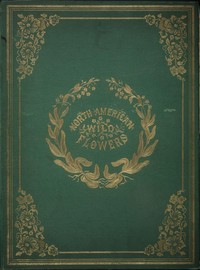
North American Wild Flowers — A Closer Reading
(0 User reviews)
737
Project Gutenberg
2018
Not confirmed
Wild flowers -- Canada; Wild flowers -- Canada -- Pictorial works
Readers of public-domain and historical texts
Project Gutenberg digital edition
en
Edition facts
Words
20,886
Reading time
91 min
Text sections
4
This digital edition of North American Wild Flowers — A Closer Reading is described by source-level measurements including 20,886 words, 1 hr 31 min estimated reading time, and 4 detected text sections.
The text analysis averages about 24.8 words per sentence, while the detected sections provide another way to judge how the source is divided.
Project Gutenberg metadata also associates the work with “Wild flowers -- Canada,” connecting these edition facts with the source record’s subject description.
Source:
Project Gutenberg record #56288
This editorial note examines the structure and recurring imagery in Agnes Fitzgibbon and Catharine Parr Traill's North American Wild Flowers, focusing on how the work moves between botanical description, practical use, and spiritual reflection, as seen in the excerpts.
Editorial Edition Score
4.6/5
★★★★★
★★★★★
Calculated from edition completeness, EPUB availability, text structure and catalogue metadata. Not a user rating.
How this score is calculated
- Description quality20 pts
- Title & short description10 pts
- Source metadata20 pts
- Text length15 pts
- Chapters / structure15 pts
- EPUB file integrity20 pts
Total of 100 points, scaled to a 2.5-5.0 range. Editions with an empty description or a missing EPUB file are not scored.
Edition quality
Read the Text
Painted and Lithographed
BOTANICAL DESCRIPTIONS
AUTHORESS OF “THE BACKWOODS OF CANADA” “THE CANADIAN CRUSOES” ET.C. ET.C.
PAGE PLATE I. Liver-Leaf—Wind-Flower.—(Sharp Lobed Hepatica.)—_Hepatica 9 Acutiloba_ Bellwort—(Wood Daffodil.)—_Uvularia perfoliata_ 11 Wood Anemone.—_Anemone Nemorosa_ 13 Spring Beauty.—_Claytonia Virginica_ 16
PLATE II. Adders-Tongue.—Dog-Toothed Violet.—_Erythronium Americanum_ 19 White Trillium.—Death-Flower.—_Trillium Grandiflorum_ 21 Rock Columbine.—_Aquilegia Canadensis_ 24
PLATE III. Squirrel Corn.—_Dicentra Canadensis_ 27 Purple Trillium.—Death-Flower.—Birth-Root.—_Trillium erectum_ 29 Wood Geranium.—Cranes-Bill.—_Geranium maculatum_ 31 Chickweed Wintergreen.—_Trientalis Americana_ 34
PLATE IV. Sweet Wintergreen.—_Pyrola elliptica_ 35 One Flowered Pyrola.—_Moneses uniflora_ 39 Flowering Raspberry.—_Rubus Odoratus_ 41 Speedwell.—American Brooklime.—_Veronica Americana_ 43
PLATE V. Yellow Lady’s Slippers.—_Cypripedium parviflorum and Cypripedium 45 pubescens_ Large Blue Flag.—_Iris Versicolor_.—_Fleur-de-luce_ 47 Small Canberry.—_Vaccinium Oxycoccus_ 50
PLATE VI. Wild Orange Lily.—_Lilium Philadelphicum_ 53 Canadian Harebell.—_Campanula Rotundifolia_ 56 Showy Lady’s Slipper.—_Cypripedium Spectabile_.—(Moccasin Flower) 59
PLATE VII. Early Wild Rose.—_Rosa Blanda_ 63 Pentstemon Beard-Tongue.—_Pentstemon pubescens_ 66
PLATE VIII. Sweet Scented Water Lily.—_Nymphæa Odorata_ 67 Yellow Pond Lily.—_Nuphar Advena_.—(Spatter Dock) 71
PLATE IX. Pitcher Plant.—(Soldier’s Drinking Cup.)—_Sarracenia Purpurea_ 73
PLATE X. Painted Cup, Scarlet Cup.—_Castilleia Coccinea_ 77 Showy Orchis.—_Orchis Spectabilis_ 81 Indian Turnip.—_Arum triphyllum_ (_Arum family_) 83 Cone Flower.—_Rudbeckia fulgida_ 87
WILD FLOWERS OF NORTH AMERICA.
The first and second edition of our Book of Wild Flowers was published last year under the title of “CANADIAN WILD FLOWERS;” but it has been suggested by some American friends that we ought not to have limited the title to the Wild Flowers of _Canada_, as nature has given them a much wider geographical range, and, in fact, there are none of those that have been portrayed and described in our volume but may be found diffused over the whole of the Eastern and Northern States of the Union, as well as to the North and West of the Great Lakes. We, therefore, have rectified the error in our present issue, not wishing to put asunder those whom the Great Creator has united in one harmonious whole, each family and tribe finding its fitting place as when it issued freshly forth from the bounteous hand of God who formed it for the use of His creatures and to His own honor and glory.
As our present volume embraces but a select few of the Native Flowers of this Northern Range of the Continent, it is our intention to follow it by succeeding series, which will present to our readers the most attractive of our lovely Wild Flowers, and flowering shrubs. The subject offers a wide field for our future labours.
What a garland of loveliness has nature woven for man’s admiration, and yet, comparatively speaking, how few appreciate the beauties thus lavishly bestowed upon them?
The inhabitants of the crowded cities know little of them even by name, and those that dwell among them pass them by as though they heeded them not, or regarded them as worthless weeds, crying, “Cut them down, why cumber they the ground?” To such careless ones they do indeed “waste their sweetness on the desert air.” Yet the Wild Flowers have deeper meanings and graver teachings than the learned books of classical lore so much prized by the scholar, if he will but receive them.
They shew him the parental care of a benificent God for the winged creatures of the air, and for the sustenance of the beasts of the field. They point to the better life, the resurrection from the darkness of the grave. They are emblems of man’s beauty and of his frailty. They lend us by flowery paths from earth to heaven, where the flowers fade not away. Shall we then coldly disregard the flowers that our God has made so wondrously fair, to beautify the earth we live on?
Mothers of America teach your little ones to love the Wild Flowers and they will love the soil on which they grew, and in all their wanderings through the world their hearts will turn back with loving reverence to the land of their birth, to that dear home endeared to their hearts by the remembrance of the flowers that they plucked and wove for their brows in their happy hours of gladsome childhood.
How many a war-worn soldier would say with the German hero of Schiller’s tragedy:
“Oh gladly would I give the blood stained victor’s wreath For the first violet of the early spring, Plucked in those quiet fields where I have journeyed.” SCHILLER.
DESCRIPTION OF THE TITLE PAGE.
North American Wild Flowers opens with a preface that immediately signals a revision: the authors renamed their earlier Canadian Wild Flowers to acknowledge the plants' wider range across eastern and northern United States. This gesture frames the book as a work of botanical geography as much as illustration. The volume pairs Agnes Fitzgibbon's lithographs with Catharine Parr Traill's descriptions, each entry following a consistent pattern: a biblical or classical epigraph, a note on etymology, a description of the plant's habitat and appearance, and often a turn to its practical or medicinal uses. The structure itself becomes a kind of argument—that wildflowers belong equally to science, household economy, and moral reflection.
From Canadian to Continental: The Revised Title
The preface explains that the first two editions were called Canadian Wild Flowers, but American readers urged a broader title. Traill writes that the plants are “diffused over the whole of the Eastern and Northern States of the Union, as well as to the North and West of the Great Lakes.” This revision is not merely cosmetic; it repositions the book as a work of shared natural heritage, crossing a political border that the plants themselves ignore. The language of unity—refusing to “put asunder those whom the Great Creator has united”—echoes the religious tone that recurs throughout the botanical descriptions. The title change thus becomes a quiet statement about the continuity of ecosystems across human boundaries.
The Lily as a Case Study in Structure
The entry for the Wild Orange Lily (Lilium Philadelphicum) exemplifies the book's layered approach. It opens with a quotation from the Gospel of Matthew—“Consider the lilies of the field”—then traces the word lily from Celtic li (whiteness) to Greek lirion. Traill cites Sir James Smith's suggestion that the biblical lily might be Amaryllis lutea, the Golden Lily of Palestine. She then notes the plant's wide geographical range, from the frigid zone to the equator, and adds a detail from Dr. Richardson: the Esquimaux call it “Mouse-root” because field mice feed on it. The entry closes with medicinal uses of white lily roots. This movement—from scripture to etymology to natural history to practical application—is the book's signature rhythm.
Recurring Images: The Cranberry and the Heath Family
The description of the Small Cranberry (Vaccinium Oxycoccus) shows how Traill weaves economic observation into botanical description. She notes that the fruit is “in great esteem for tarts and preserves” and has been used “in cancerous affections as an outward application.” She then remarks that although cranberries are cultivated profitably in the northern United States, “no enterprising person has yet undertaken to supply the markets of Canada.” The plant is placed within the heath family (Ericaceae), and its “delicate pink-tinted flowers” are compared to exotic greenhouse plants. This pattern—linking a wild plant to domestic economy, medicine, and aesthetic appreciation—recurs throughout the volume, giving each entry a practical as well as a botanical dimension.
Movement Between Scene and Scientific Detail
Traill's prose frequently shifts between the specific and the general, the local and the global. In the Lily entry, she moves from the fields of Judea to the Arctic plants of Dr. Richardson to the Kamtschatkan use of Lilium pomponium as food. The Cranberry entry begins with its medicinal properties, then discusses market potential, then places it in the Ericaceae order, and finally notes its Greek etymology (oxus, sour; coccus, berry). These shifts create a sense of the plant as embedded in multiple contexts: scientific classification, human use, and geographical distribution. The illustrations by Fitzgibbon—painted and lithographed—anchor these verbal movements in a visual stillness, inviting the reader to look closely at the specimen while the text ranges widely.
Readers approaching North American Wild Flowers will find that the book rewards attention to its recurring structural patterns: the epigraph, the etymology, the habitat note, the practical use. Traill's voice is consistently that of a naturalist who sees the divine in the particular, and Fitzgibbon's plates provide the visual counterpart to that vision. The work is best read not as a field guide but as a series of meditations on the relationship between human culture and wild nature—meditations that move freely across continents, centuries, and disciplines.
That book about Traill’s wildflowers stayed with me—the way it moved from roots to remedies to quiet reverence. It reminded me of another gentle companion, Botany for Ladies or, A Popular Introduction to the Natural System of Plants, According to the Classification of De Candolle. — A Closer Reading, where classification felt less like science and more like learning a friend’s name. Some books simply settle in your chest.
There are no reviews for this eBook.
There are no comments for this eBook.
Reader reflection
How did this book work for you?
Your answers remain private and are stored only in this browser.
Your progress
0
/
10
2
Was reading this book enjoyable?
3
Would you encourage someone else to read it?
4
How much effort did this book require?
5
How well did it match your expectations?
6
How did the pace of the book feel?
7
Would you like to discuss this book with someone?
8
How original did the book feel?
9
What is the main idea you are taking away?
10