1

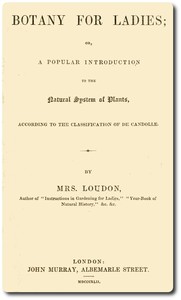
Botany for Ladies or, A Popular Introduction to the Natural System of Plants, According to the Classification of De Candolle. — A Closer Reading
(0 User reviews)
869
Project Gutenberg
2014
Not confirmed
Botany; Plants -- Classification
Readers of public-domain and historical texts
Project Gutenberg digital edition
en
Edition facts
Words
99,268
Reading time
432 min
Text sections
13
This digital edition of Botany for Ladies or, A Popular Introduction to the Natural System of Plants, According to the Classification of De Candolle. — A Closer Reading is described by source-level measurements including 99,268 words, 7 hr 12 min estimated reading time, and 13 detected text sections.
The text analysis averages about 22.0 words per sentence, while the detected sections provide another way to judge how the source is divided.
Project Gutenberg metadata also associates the work with “Botany,” connecting these edition facts with the source record’s subject description.
Source:
Project Gutenberg record #47039
Mrs. Loudon's 1842 botany manual uses a personal narrative of her own learning struggles to introduce the natural system of plant classification, with detailed descriptions of plant families and genera.
Editorial Edition Score
4.9/5
★★★★★
★★★★★
Calculated from edition completeness, EPUB availability, text structure and catalogue metadata. Not a user rating.
How this score is calculated
- Description quality20 pts
- Title & short description10 pts
- Source metadata20 pts
- Text length15 pts
- Chapters / structure15 pts
- EPUB file integrity20 pts
Total of 100 points, scaled to a 2.5-5.0 range. Editions with an empty description or a missing EPUB file are not scored.
Edition quality
Read the Text
LACEÆ: illustrated by the Garden Ranunculus; the Butter-cup; the Peony; the Anemone; the Hepatica; the Clematis; the Christmas Rose; the Winter Aconite; Monkshood; the Larkspur; and the Columbine 9
The Genus Ranunculus, 10—The Genus Ficaria, 16—The Genus Pæonia, 18—The Genus Anemone, 19—The Genus Clematis, 23—The Genus Helleborus, &c. 25—The Genus Aconitum, 27—The Genus Delphinium, 29—The Genus Aquilegia, 31.
THE ORDER LEGUMINOSÆ: illustrated by the Sweet Pea; the Red Clover; Acacia armata; the Sensitive Plant; the Barbadoes Flower-fence; the Carob-tree; the Tamarind; the Senna; the Gleditschia; the Logwood; the Judas-tree; and the Kentucky Coffee-tree 35
Tribe I. Papilionaceous Flowers, 36—II. Mimosæ, 41—III. Cæsalpineæ, 44.
THE ORDER ROSACEÆ: illustrated by different kinds of Roses; the Potentilla; the Strawberry; the Raspberry; Spiræa; Kerria or Corchorus japonica; the Almond; the Peach and Nectarine; the Apricot; the Plum; the Cherry; the Apple; the Pear; The Mountain Ash; the White Beam Tree; the Quince; Pyrus or Cydonia japonica; the Hawthorn; the Indian Hawthorn; the Medlar; Photinia; Eriobotrya; Cotoneaster; Amelanchier; Burnet; and Alchemilla, or Ladies’ Mantle 50
Tribe I. Roseæ, 51—II. Potentilleæ or Dryadeæ, 54—III. Spiræeæ, 58—IV. Amygdaleæ, 60—V. Pomeæ, 65—VI. Sanguisorbeæ, 73.
THE ORDER ONAGRACEÆ: illustrated by the different kinds of Fuchsia; Œnothera, or the Evening Tree-Primrose; Godetia; Epilobium, or the French Willow-herb; and Clarkia 75
The Genus Fuchsia, 75—The Genus Œnothera, 79—The Genus Clarkia, 83.
THE ORDER RUBIACEÆ: illustrated by the Cinchona, or Peruvian Bark; Luculia gratissima; Cape Jasmine; Rondeletia; Coffee; Ixora; Ipecacuanha; Madder; Galium; Woodruff; and Crucinella stylosa 85
The Genus Cinchona and its allies, 86—The Genus Gardenia and its allies, 89—The Genus Rondeletia and its allies, 90—The Genus Coffea and its allies, 91—The Genus Galium and its allies, 94.
THE ORDER COMPOSITÆ: illustrated by the Succory; the Sow-Thistle; the Dandelion; the Burdock; the Daisy; the Chrysanthemum; Feverfew; Pellitory of Spain; Wild Chamomile; True Chamomile; Yarrow; the Bur-Marigold; Groundsel; Ragwort; Bird’s Tongue; Purple Jacobæa; Cineraria; Sunflower; Mutisia; and Triptilion 98
Tribe I. Cichoraceæ, 101—II. Cynarocephalæ, 103—III. Corymbiferæ, 104—IV. Labiatæfloræ, 107.
THE ORDER ERICACEÆ: illustrated by the Common or Besom Heath; the Moor Heath; Cape Heaths; Ling or Heather; Andromeda; Lyonia; St. Dabæoc’s Heath; Arbutus; the Bearberry; Gaultheria; Clethra; Rhododendron; Indian or Chinese Azaleas; Yellow Azalea; American Azaleas; Rhodora; Kalmia; Menziesia; Loiseleuria; Ledum; Leiophyllum; the Bilberry; the Whortle-berry; the Cranberry; Pyrola; and Monotropa 109
Tribe I. Ericeæ, 110—Sub-Tribe I. Ericeæ Normales, 111—II. Andromedeæ, 115—Tribe II. Rhodoreæ, 120—III. Vaccinieæ, 130—IV. Pyroleæ, 132.
THE ORDER OLEACEÆ, or Jasmineæ: illustrated by the Common White Jasmine; the Yellow Jasmine; the Privet; the Phillyrea; the Olive; the Fringe-tree (_Chionanthus virginica_); the Lilac; the Common Ash; and the Manna or Flowering Ash 133
Tribe I. Jasmineæ, 134—II. Oleineæ, 136.
THE ORDER SOLANACEÆ: illustrated by the Bitter-Sweet; Garden Nightshade; Potato; Egg-Plant; Tomato; Capsicum; Winter Cherry; Cape Gooseberry; the Deadly Nightshade; Lycium, or Duke of Argyle’s Tea-tree; Cestrum; Vestia; Tobacco; Petunia; Nierembergia; Salpiglossis; Schizanthus; Henbane; Datura; Brugmansia; Solandra; Verbascum; Celsia; Nolana; &c. 141
Tribe I. Solanaceæ, 142—II. Nicotianeæ, 147; III. Verbascineeæ, 153—IV. Nolaneæ, 155.
THE ORDER URTICACEÆ: illustrated by the Common Nettle; the Hop; the Hemp; the Pellitory of the Wall; the Bread-Fruit Tree; the Jack-tree; the Cow-tree, or Palo de Vacca; the Upas or Poison-tree of Java; the Mulberry; the Paper Mulberry; the Osage Orange, or Maclura; the Common Fig; Ficus Sycamorus; the Banyan Tree; the Indian-Rubber Tree; and Ficus religiosa 157
Tribe I. Urticaceæ, 158—II. Artocarpæ, 163.
THE CATKIN-BEARING TREES: illustrated by the Walnut; the Hickory; the Willow; the Poplar; the Alder; the Birch; the Oak; the Beech; the Sweet Chesnut; the Hazel; the Hornbeam; the Hop Hornbeam; the Plane Trees; the Liquidambar; Myrica; Comptonia; Casuarina; and Garrya elliptica 174
Juglandaceæ, the Walnut Tribe, 176—the Genus Juglans, ib.—the Genus Carya, 180—Salicaceæ, the Willow Tribe, 181—the Genus Salix, 182—the Genus Populus, 184—Betulaceæ, the Birch Tribe, 187—the Genus Betula, 188—the Genus Alnus, 189—Cupuliferæ, the Cup-bearing Trees, 190—the Genus Quercus, 191—the Genus Fagus, 195—the Genus Castanea, 198—the Genus Corylus, 200—the Genus Carpinus, 201—the Genus Ostrya, 202—the Order Platanaceæ, ib.—the Genus Platanus, ib.—the Genus Liquidambar, 203—the Order Myricaceæ, ib.—the Genus Myrica, 204—the Order Garryaceæ, ib.—the Genus Garrya, ib.
THE CONE-BEARING TREES: illustrated by the Scotch Pine; the Spruce Fir; the Silver Fir; the Larch; the Cedar; the Araucaria; the Arbor Vitæ; the Cypress; the Deciduous Cypress; the Juniper; the Yew; and the Cycadeæ 205
§ I. The Abietineæ, the Pine and Fir Tribe, 206—the Genus Pinus, 209—the Genus Abies, the Spruce Fir, 212—the Genus Picea, the Silver Fir, 214—the Genus Larix, the Larch, 216—the Genus Cedrus, the Cedar, 217—the Genus Araucaria, 219—§ II. Cupressineæ, the Cypress Tribe, 220—the Genus Callitris, 222—the Genus Cupressus, the Cypress, 223—the Genus Taxodium, the Deciduous Cypress, 224—the Genus Juniperus, the Juniper, 225—§ III. Taxineæ, the Yew Tribe, 228—the Genus Taxus, the Yew, ib.—the Order Cycadæ, 229.
SKETCH OF THE NATURAL SYSTEM, ACCORDING TO PROFESSOR DECANDOLLE 231
PHANEROGAMOUS PLANTS—DICOTYLEDONEÆ—I. DICHLAMYDEÆ 239
4. Anonaceæ—the Custard-apple Tribe 245
5. Menispermaceæ—the Cocculus Tribe 246
Mrs. Loudon opens her botanical manual not with a dry definition but with a frank confession: as a child she found the Linnean system 'excessively repugnant' and could never remember its classes and orders. This personal anecdote, drawn from the preface, establishes a distinctive narrative voice that recurs throughout the work—one that acknowledges difficulty and aims to demystify. The author frames her own journey from ignorance to competence as a model for the reader, particularly for women who, like her, might feel barred by intimidating terminology. The book thus carries a dual purpose: to teach plant classification according to De Candolle's natural system, and to reassure that the hard names on 'the very threshold of the science' can be mastered.
A Confessional Preface as Pedagogical Strategy
The preface functions as an extended origin story. Loudon recounts her failed childhood attempts at botany, her marriage to the horticulturist John Loudon, and the social pressure she felt as 'Mr. Loudon’s wife' to answer gardeners' questions. This is not mere autobiography; it is a calculated rhetorical move. By presenting herself as a former failure, she lowers the barrier for her readers. The moment of breakthrough comes when she identifies a plant as 'some Malvaceous plant'—a term that links the unfamiliar Malope grandiflora to the familiar mallow (Malva). This episode crystallizes the book's method: learning by association within the natural system, not by rote memorization of Linnean categories. The preface thus models the very cognitive shift the book aims to produce.
Descriptive Precision in the Plant Orders
In the body of the work, Loudon's prose shifts from personal narrative to systematic description. Each order receives a compact treatment: for example, the Anonaceae (custard-apple tribe) are characterized by 'thick fleshy petals' and fruit that is 'fleshy eatable ... divided into many cells.' She notes that the hardy species formerly in Anona have been reclassified as Asimina, with 'berry-like carpels growing together, not eatable.' Such distinctions show her attention to both botanical accuracy and practical utility—what a gardener might encounter. The descriptions are dense with detail: the number of sepals, the shape of anthers, the color of berries. Yet she avoids overwhelming the reader by anchoring each order to a familiar representative, such as the common berberry (Berberis vulgaris) for the Berberideae, whose flower parts she enumerates with precision.
Pacing and the Interplay of Narrative and Taxonomy
The book's pace alternates between the leisurely, anecdotal tone of the preface and the brisk, factual style of the systematic sections. This variation is deliberate: the personal passages provide rest and motivation, while the taxonomic descriptions demand focused attention. In the preface, sentences are longer and more reflective; in the order descriptions, they become shorter and more list-like, as in the Menispermaceæ entry: 'All the plants contained in this order are climbing exotic shrubs, generally with drooping racemes of small delicate flowers.' The shift in pace mirrors the learning process itself—moments of narrative engagement followed by concentrated study. Loudon also uses the occasional practical note, such as the use of Cocculus indicus berries 'to give an intoxicating property' to porter, to leaven the taxonomy with curiosity.
Readers approaching Botany for Ladies will find it most rewarding if they attend to the interplay between Loudon's personal voice and her systematic exposition. The preface is not a mere introduction but a key to the book's pedagogical method. When the descriptions grow dense, it helps to recall that each order is presented as part of a connected natural system, not as an isolated list. The book rewards slow reading: pause over the structural details of a flower, then step back to see how the author has built a bridge from the familiar to the unfamiliar.
I remember Mrs. Loudon writing that plants reveal themselves slowly, if you let them. That patience feels echoed in the old cactus surveys, where careful hands sketched spines and flowers that never hurried. Sometimes I open A Preliminary Revision of the North American Species of Cactus, Anhalonium, and Lophophora — Text and Context just to sit with that quiet, meticulous attention.
There are no reviews for this eBook.
There are no comments for this eBook.
Reader reflection
What was your reading experience?
Capture what you thought, learned, and would like to remember.
Your progress
0
/
10
2
How did the book work for you overall?
3
Would you encourage someone else to read it?
4
Did the language feel accessible?
5
Would you start a conversation about this book?
6
What was its emotional impact?
7
Did the story or argument move comfortably?
8
How understandable was the text?
9
Which lesson or insight stayed with you?
10