1

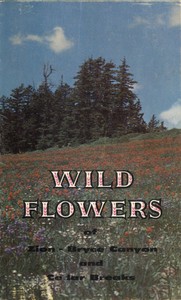
Wild Flowers of Zion and Bryce Canyon National Parks and Cedar Breaks National Monument — Inside the Classic
(0 User reviews)
495
Project Gutenberg
2017
Not confirmed
Wild flowers -- Utah -- Zion National Park -- Pictorial works; Wild flowers -- Utah -- Bryce Canyon National Park -- Pictorial works; Wild flowers -- Utah -- Cedar Breaks National Monument -- Pictorial works
Readers of public-domain and historical texts
Project Gutenberg digital edition
en
Edition facts
Words
14,981
Reading time
66 min
Text sections
4
The source record for Wild Flowers of Zion and Bryce Canyon National Parks and Cedar Breaks National Monument — Inside the Classic measures this digital text at 14,981 words, 1 hr 6 min estimated reading time, and 4 detected text sections.
The text analysis averages about 18.5 words per sentence, while the detected sections provide another way to judge how the source is divided.
Project Gutenberg metadata also associates the work with “Wild flowers -- Utah -- Zion National Park -- Pictorial works,” connecting these edition facts with the source record’s subject description.
Source:
Project Gutenberg record #55363
This editorial note examines how Jepson and Allen's 1958 guidebook uses elevation zones, color-based plate groupings, and brief phenological notes to help visitors identify 106 wildflower species across three Utah parks, without claiming completeness.
Editorial Edition Score
4.5/5
★★★★★
★★★★★
Calculated from edition completeness, EPUB availability, text structure and catalogue metadata. Not a user rating.
How this score is calculated
- Description quality20 pts
- Title & short description10 pts
- Source metadata20 pts
- Text length15 pts
- Chapters / structure15 pts
- EPUB file integrity20 pts
Total of 100 points, scaled to a 2.5-5.0 range. Editions with an empty description or a missing EPUB file are not scored.
Edition quality
Read the Text
WILD FLOWERS of Zion and Bryce Canyon NATIONAL PARKS and Cedar Breaks NATIONAL MONUMENT
Text and Color Photographs by CARL E. JEPSON Chief Park Naturalist and LELAND F. ALLEN Park Naturalist
Published and Copyright 1958 by ZION-BRYCE NATURAL HISTORY ASSOCIATION in cooperation with the NATIONAL PARK SERVICE UTAH
In these areas of Zion and Bryce Canyon National Parks and Cedar Breaks National Monument, four life zones are found extending from low elevations of near 3,600 feet to extremes of over 11,300 feet. The area within elevations from the lowest point to 4,000 feet is the Lower Sonoran Zone; above that to 7,000 feet is the Upper Sonoran Zone; from 7,000 to 8,500 feet is the Transition Zone; above that to 10,000 feet is the Canadian Zone; and from 10,000 feet to the highest point on Brian Head Peak is the Hudsonian Zone.
Native plants typical of desert, mesa and mountain grow within these extremes of elevation and include a wide variety of species. Of the three areas featured, Cedar Breaks National Monument contains the greatest variety, and frequently exhibits marvelous displays, depending on the amount of rainfall from year to year.
The purpose of this booklet is to help visitors in their enjoyment of the flowers they find along the roadways and trails—flowers they observe, appreciate and probably photograph but leave UNPICKED for the pleasure of others.
Through the mediums of color photography and color lithography one hundred and six species of wild flowers and plants most commonly seen are presented in closeup detail as an aid to identification. Brief descriptions of size, habitat, blooming period, use, economic value and other details are given.
The flowers have been arranged in a general order of families, except that occasionally, for the convenience of preparing the color plates, flowers of similar color or density have been grouped on a page although they are not in the same family nor closely related.
The Standardized Plant Names of the American Joint Committee on Horticultural Nomenclature has been followed as the guide. In case of locally used common names, such has been indicated in the text.
This booklet on Wild Flowers has been produced by the Zion-Bryce Natural History Association in cooperation with the National Park Service. The Association has for its objective the fuller interpretation of the scenic, scientific, aesthetic and historic values of these National Parks, to the end that park visitors are provided with such information, audio and visual aids as will help them gain a better understanding and greater appreciation of the phenomena they find in them.
It is hoped that this brief treatise on the flora may prove helpful to many visitors in learning more about some of the important species of plant life that they may discover during their visits to the Zion and Bryce Canyon National Parks and Cedar Breaks National Monument.
Credit for the photographic work goes to several individuals, all members of the interpretive staffs of these areas during the past few years. Park Naturalists Carl E. Jepson and Leland F. Allen have prepared the descriptive information given for each flower.
The printing and color processing by the Wheelwright Lithographing Company, 975 So. West Temple, Salt Lake City, Utah.
1. SEGOLILY MARIPOSA Lily Family _Calochortus nuttallii_
The Segolily Mariposa was chosen as the State Flower of Utah probably because of the important use early pioneers made of the root bulbs of this plant in supplementing their meager diets during the early settlement period. The name “Sego” (pronounced see-go) is of Shoshonean origin, and this flower was sacred in Indian legend long before the arrival of Utah pioneers in 1847.
This plant is found in rather dry, rocky soils and puts on a very showy display during May and June. It is more commonly known as the Mariposa Lily in other sections of the country, but in Utah it is called the Segolily.
There are three species in color of white, pink and yellow found in the Zion Region.
2. YELLOW MARIPOSA Lily Family _Calochortus nuttallii var. aureus_
Found only in the petrified forest of the Coalpits Wash section of Zion National Park, this plant is not very abundant and probably suffered from overgrazing by livestock during the settlement period before Zion became a National Park.
Mariposa in Spanish means butterfly.
This species with bright-yellow flowers is associated with a specific geologic stratum—the Petrified Forest member of the Chinle formation. It is found in great abundance in the Petrified Forest National Monument near Holbrook, Arizona.
3. PRAIRIE SPIDERWORT Spiderwort Family _Tradescantia occidentalis_
Jepson and Allen organize their wildflower guide around the dramatic elevation gradient of Zion, Bryce Canyon, and Cedar Breaks, which spans from 3,600 to over 11,300 feet. They identify five life zones—Lower Sonoran through Hudsonian—and note that Cedar Breaks contains the greatest variety of species, with displays that vary markedly with annual rainfall. The authors state their purpose is to help visitors enjoy flowers along roadways and trails, urging that blooms be left unpicked for others.
Elevation as Organizing Principle
The introduction maps five life zones onto the three areas, from the Lower Sonoran Zone below 4,000 feet to the Hudsonian Zone above 10,000 feet. This framework is not merely descriptive; it shapes which species appear where. For example, the Fringed Gentian is reported in moist meadows near or above 10,500 feet at Cedar Breaks, while Butterfly Milkweed is found in dry places above 4,000 feet, especially in Birch Creek Canyon. The authors also note that Indianpotato emerges as snow melts above 7,000 feet, one of the first spring flowers. These details tie each plant to a specific elevation band, making the booklet a practical field companion for hikers moving through different zones.
Color Plates and Practical Identification
The authors acknowledge that flowers are arranged in a general order of families, but occasionally, for convenience of preparing color plates, flowers of similar color or density are grouped on a page even if not closely related. This pragmatic choice prioritizes visual comparison over taxonomic strictness. The guide includes 106 species presented in closeup color photographs, with brief descriptions of size, habitat, blooming period, and economic value. For instance, the Skyrocket Gilia is noted for its star-shaped scarlet flowers that attract hummingbirds, while the Shootingstar gets its name from reflexed petals and down-pointed stamens. Such details aid quick identification in the field.
Temporal Cues and Ephemeral Blooms
Several entries emphasize the fleeting nature of certain flowers. Indianpotato has a very brief blooming period; soon after flowers fade, the leaves disappear and the plant lies dormant most of the year. Similarly, the Parry Primrose is described as a rewarding sight for those who gain high places, though its fragrance disappoints. The authors also note that the Fringed Gentian can carpet alpine meadows with deep-blue color, but this display depends on rainfall from year to year. These temporal observations remind readers that the booklet captures a moment in a dynamic landscape, not a static catalog.
Readers should treat this guide as a snapshot of mid-20th-century park interpretation, produced by the Zion-Bryce Natural History Association in cooperation with the National Park Service. The authors, both park naturalists, write from direct observation, but the excerpts do not reveal whether all 106 species are illustrated or how the color plates were selected. For those using the booklet on the trail, the elevation and habitat notes will be more useful than the family groupings, and the warnings about variable rainfall and brief bloom periods are worth heeding.
That rainy afternoon, flipping through Jepson and Allen’s wildflower guide, I kept pausing on their quiet notes about when each bloom appears—not exhaustive, just enough to make me wonder about the hidden timing of things. Later, almost without thinking, I reached for The Movements and Habits of Climbing Plants — Reading Notes and found the same patient attention, this time to how tendrils feel their way forward. One book simply led to the other.
There are no reviews for this eBook.
There are no comments for this eBook.
Reader reflection
Your personal reading reflection
Build a private reading journal entry for this title.
Your progress
0
/
10
2
Did this book hold your interest?
3
Would you pass this book on to a friend?
4
What was the reading difficulty like?
5
Was the book moving at the right speed?
6
Could you follow the author’s main argument?
7
How would you rate its originality?
8
What was its emotional impact?
9
What changed or sharpened your thinking?
10