
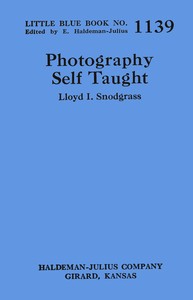
Photography self taught by Lloyd I. Snodgrass
Let's be clear from the start: this isn't a novel. There's no protagonist or villain, unless you count underexposed film. Photography Self Taught is exactly what the title promises—a step-by-step manual from 1914 designed to take a complete beginner from knowing nothing to developing their own prints.
The Story
The 'story' is your journey. Snodgrass starts with the absolute basics: how a camera works, explaining the lens and shutter like you've never seen one before. He then guides you through the entire process. You'll learn how to load glass plate negatives or early film, how to compose a shot when you can't instantly review it, and the real meat of the book—the darkroom work. He details how to mix chemicals, develop your negatives, and make contact prints or enlargements, all with equipment you could realistically set up at home. The plot points are your successes and failures: getting the exposure right, mastering the development timing, and finally holding a physical print you created from scratch.
Why You Should Read It
I loved this book for its sheer optimism and clarity. Snodgrass assumes no prior knowledge, only curiosity. Reading it today is a fascinating historical look at a hands-on craft, but it's also a powerful mindset reset. In our age of instant digital photos, this book reconnects you with the physical, deliberate, and sometimes unpredictable art of making a photograph. You gain a deep appreciation for the skill and patience required. It demystifies the process in a way that modern, software-heavy guides often don't. You finish it feeling like, 'Hey, I could actually do this.' It makes photography feel tangible again.
Final Verdict
This book is perfect for two kinds of people: history and hobby enthusiasts who love seeing how things were done a century ago, and modern photographers feeling a bit disconnected from their craft. If you shoot digital but want to understand the foundational principles of exposure and composition without any tech jargon, Snodgrass explains it beautifully. It's also a gem for anyone curious about analog photography or setting up a home darkroom. It's not a quick read; it's a practical, inspiring guidebook. Keep an open mind, and you might just find yourself looking at your camera—and the world—in a whole new light.
This masterpiece is free from copyright limitations. Access is open to everyone around the world.
Emma Williams
9 months agoComprehensive and well-researched.

Mary Torres
1 year agoTo be perfectly clear, the storytelling feels authentic and emotionally grounded. Thanks for sharing this review.