
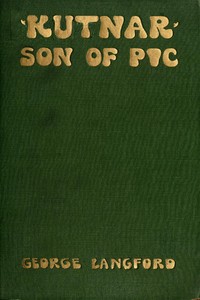
Kutnar, Son of Pic by George Langford
I picked up 'Kutnar, Son of Pic' expecting a straightforward adventure yarn about cavemen fighting mammoths. What I found was a much deeper and more emotional story. Published in 1911, George Langford's novel feels fresh in its focus on character and motive, even set 25,000 years in the past.
The Story
The story follows Kutnar, a young man in a prehistoric tribe. His world is shattered when his father, the respected hunter Pic, is found dead. The tribe elders write it off as a hunting accident, a common peril in their dangerous world. But Kutnar can't accept that. He notices small things others miss—the way the body was found, the absence of a prized weapon—and a burning certainty takes hold: this was murder.
Driven by loyalty and a raw need for justice, Kutnar leaves the safety of his tribe. His journey is a solo mission across a landscape filled with sabertooth cats, cave bears, and rival human clans. He's not just surviving; he's piecing together a puzzle, learning to read signs and interpret human behavior in his search for the killer. It's a tense, personal quest that pits his developing intellect against ancient, brute forces.
Why You Should Read It
What grabbed me wasn't the setting, but Kutnar himself. Langford makes him feel real. His doubt, his stubbornness, his loneliness—you feel it all. This book is about the moment early humans started to think instead of just react. Kutnar uses logic and observation, tools just as important as his spear. The theme of a son seeking justice for his father is timeless, and seeing it play out in such a raw, lawless world makes it incredibly powerful. It’s a story about the birth of conscience.
Final Verdict
This book is a hidden gem. It's perfect for readers who love historical fiction but want something far off the beaten path of knights and Vikings. If you enjoy stories about underdog characters, mysteries where the protagonist has to rely on their wits, or just a solid, character-driven adventure, you'll get a kick out of this. Don't let the 1911 publication date scare you—Kutnar's heartache and determination are as relatable today as they were over a century ago. It's a short, compelling read that proves a good story is truly timeless.
This title is part of the public domain archive. You are welcome to share this with anyone.
John Rodriguez
8 months agoWhile browsing through various academic sources, the structural organization allows for quick referencing of key points. This should be on the reading list of every serious professional.
Matthew Jones
5 months agoThe information is current and very relevant to today's needs.
Michelle Brown
1 year agoBased on the summary, I decided to read it and the arguments are well-supported by credible references. A true masterpiece.
Susan Anderson
2 years agoAmazing book.






Linda Lee
8 months agoFrom a researcher's perspective, the narrative arc keeps the reader engaged while delivering factual content. A refreshing and intellectually stimulating read.