
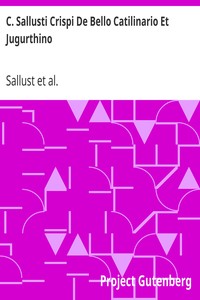
C. Sallusti Crispi De Bello Catilinario Et Jugurthino by Sallust
This book is actually two short works in one. Sallust, a Roman historian who had a front-row seat to the political chaos of his time, wrote them after his own career in politics ended. He’s not a dry chronicler; he’s a man with a point to view, disillusioned and sharp.
The Story
The first part, The Catilinarian Conspiracy, is a tense, fast-paced account of a year in Roman politics. Catiline, a well-born but broke senator, loses an election for the highest office. Desperate and ambitious, he plots a violent coup with other bankrupt nobles. The story follows the cat-and-mouse game as the consul Cicero pieces together the plot through spies and informants, leading to dramatic speeches in the Senate and the eventual confrontation.
The second part, The Jugurthine War, shifts to a military conflict in North Africa. It follows the war between Rome and Jugurtha, a crafty Numidian king. The narrative shows how Jugurtha initially outsmarts and bribes the corrupt Roman commanders sent against him, famously quipping that Rome is 'a city for sale.' The story only turns when honest, capable generals finally take charge.
Why You Should Read It
Don't let the ancient date scare you. Sallust is obsessed with character and motive. Catiline isn't just a villain; he's a complex figure of wasted talent and terrifying ambition. You see how personal failure and systemic corruption create a perfect storm. His writing is punchy and moralistic. He’s constantly asking: what makes a society fall apart? Is it external enemies, or the internal rot of greed and lost virtue? Reading him, you realize the political playbook—ambition, corruption, propaganda—hasn't changed much in 2000 years.
Final Verdict
This is perfect for anyone who loves political dramas, true crime, or historical nonfiction that reads like a novel. If you enjoyed the intrigue of 'Game of Thrones' or the moral complexity of Shakespeare's tragedies, you'll find a fascinating ancestor here. It’s a short, powerful dose of history that’s more about human nature than dates and battles. Just be ready for a cynical, no-nonsense guide who believed Rome’s greatest enemy was itself.
This text is dedicated to the public domain. Share knowledge freely with the world.
Christopher Garcia
2 years agoA brilliant read that I finished in one sitting.
Carol Harris
7 months agoGreat read!
Ethan King
10 months agoTo be perfectly clear, it provides a comprehensive overview perfect for everyone. A true masterpiece.
Barbara Scott
2 years agoI didn't expect much, but the atmosphere created is totally immersive. Exactly what I needed.





Sarah Hernandez
11 months agoThe clarity of the concluding remarks is very professional.