
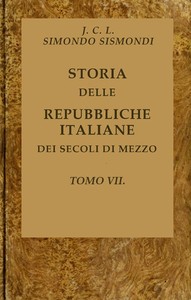
Storia delle repubbliche italiane dei secoli di mezzo, v. 07 (of 16) by Sismondi
Let's set the scene. It's the later Middle Ages in Italy, but forget knights in shining armor for a second. Think instead of crowded city squares, guild halls buzzing with debate, and palaces where political fortunes change with a whispered rumor. In this seventh volume of his epic series, historian J.C.L. Sismondi zooms in on the internal machinery of places like Florence, Siena, and Genoa. The 'plot' here isn't a single narrative, but the recurring, dramatic cycle of how these republics governed themselves.
The Story
Sismondi guides us through a world where constitutions were living documents, constantly amended. He shows how a trade dispute could spiral into a constitutional crisis, and how a populist leader could rally the 'popolo' (the common citizens) to challenge the ruling 'grandi' (the great families). The book details the creation of new offices, like the Florentine Priors, designed to balance power. It follows the tense negotiations between merchant guilds and noble councils, and the explosive moments when those negotiations broke down into street violence. It's a story of procedural innovation, raw class conflict, and the eternal question of who truly gets to rule a city.
Why You Should Read It
What makes this old history feel fresh is Sismondi's focus on human agency. These aren't just abstract 'forces of history' at work. You meet shrewd bankers, fiery speechmakers, and cautious lawmakers all trying to steer their ship of state. You see how fragile their creations were. A law passed on Tuesday could be overturned by a mob on Wednesday. Reading this, you gain a deep appreciation for the sheer effort and constant vigilance required to maintain a republic. It demystifies politics, showing it as the gritty, contentious, and deeply human struggle it has always been.
Final Verdict
This is a book for the curious reader who loves political drama and world-building, but prefers real history to fiction. It's perfect for fans of books like 'The Republic of Pirates' or TV shows like 'Game of Thrones,' but who want the real deal. It's also ideal for anyone who thinks history is boring—Sismondi's detailed account of political maneuvering proves otherwise. Fair warning: it's dense and part of a huge series, so it's a commitment. But if you're fascinated by the origins of democracy, civic life, and how people fight for power, this volume offers a masterclass in political tension, straight from the source.
No rights are reserved for this publication. Share knowledge freely with the world.
Jennifer Perez
1 year agoVery helpful, thanks.
Karen Hill
2 years agoI didn't expect much, but the pacing is just right, keeping you engaged. Highly recommended.
Karen Smith
5 months agoHaving read this twice, it challenges the reader's perspective in an intellectual way. Worth every second.
Oliver Allen
1 year agoIf you enjoy this genre, the author's voice is distinct and makes complex topics easy to digest. Thanks for sharing this review.








Michael White
2 years agoI've been looking for a reliable source on this topic, and the way it handles controversial points with balance is quite professional. It cleared up a lot of the confusion I had previously.