
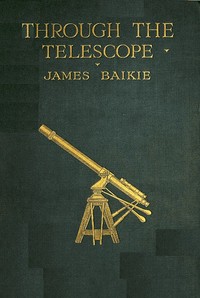
Through the Telescope by James Baikie
James Baikie's Through the Telescope is a quiet, observational story that feels surprisingly modern for its time. Forget epic space adventures; this is a grounded, human-scale look at curiosity and perception.
The Story
The plot is beautifully simple. Our narrator, feeling isolated or perhaps just contemplative, finds an old telescope. Instead of training it on the moon, they aim it at the windows and streets of their own community. We see vignettes of daily life: a couple arguing, a scholar working late, children playing, a solitary figure pacing a room. These aren't dramatic spy scenes, but ordinary fragments. The tension builds slowly, not from action, but from the growing weight of these observations. The narrator starts to piece together stories, misunderstand situations, and ultimately confronts their own place as a watcher, separate yet connected to the tapestry of lives around them. The climax isn't a shout; it's a quiet realization about the distance between seeing and truly knowing another person.
Why You Should Read It
What grabbed me was how Baikie makes observation feel like an active, almost moral, choice. In our age of social media scrolling, this book from 1906 asks fresh questions: What responsibility do we have as observers? Does watching change what we see? The characters the narrator watches are lightly sketched, but they feel real because we, like the narrator, are filling in the blanks. It's a book that makes you look up from the page and notice the world outside your own window with new curiosity. It’s meditative without being slow, and insightful without being preachy.
Final Verdict
This is a perfect little book for readers who enjoy character-driven stories, historical fiction that doesn't feel dusty, or anyone who's ever felt like a quiet observer of life. If you like authors who explore inner worlds and everyday philosophy—think of it as a gentle, Edwardian-era companion to the mood of a Richard Linklater film—you'll find a lot to love here. It's a short, potent reminder that sometimes the greatest mysteries are the ones living right next door.
This publication is available for unrestricted use. You do not need permission to reproduce this work.
Ashley Taylor
2 years agoI appreciate how this edition approaches the core problem, the objective evaluation of the pros and cons is very refreshing. If you want to master this topic, start right here.
Nancy Martin
1 year agoThe methodology used in this work is academically sound.
Lucas Sanchez
1 year agoI came across this while browsing and the depth of research presented here is truly commendable. Definitely a 5-star read.
Sarah Martinez
11 months agoThe layout is perfect for tablet and e-reader devices.